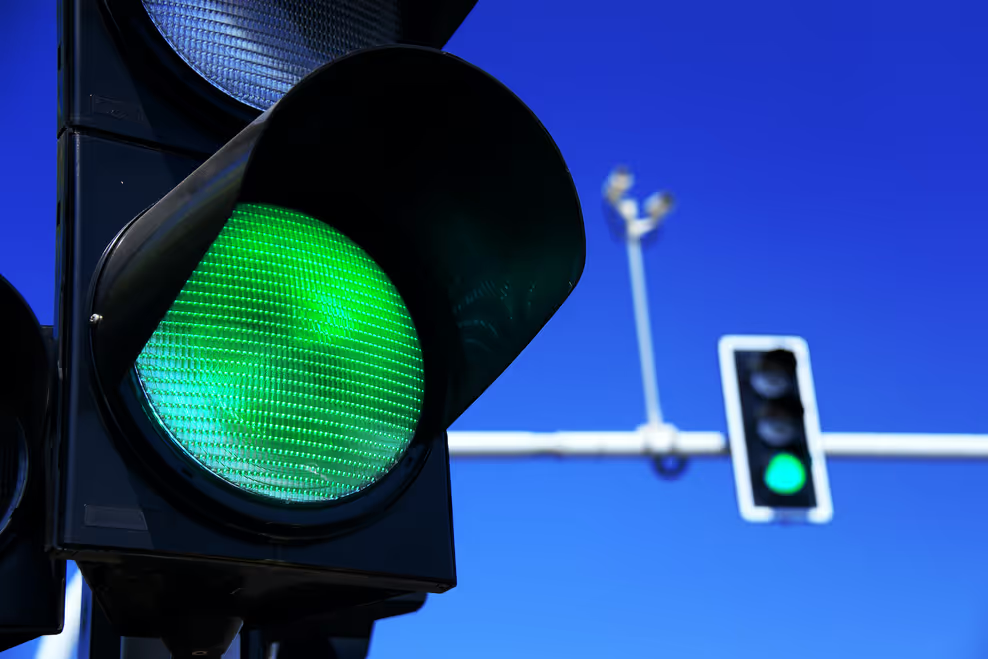
Vancouver Green Light: Google AI Traffic Signal Pilot
The City of Vancouver has joined Google’s traffic AI initiative known as “Project Green Light.” This new Vancouver Green Light partnership uses artificial intelligence and Google Maps driving data. The goal is simple: smoother traffic flow and less vehicle idling across the city.
The pilot officially started on July 17, 2026. It will run until the end of 2027. Importantly, the partnership costs the municipal government nothing.
This move places Vancouver among a growing list of global cities testing AI-driven traffic solutions. As congestion worsens in many urban centers, cities are turning to technology for answers. Vancouver’s approach, however, remains cautious and fully within municipal control.
How the Google Green Light Program Works
Google will analyze aggregated driving trends collected through Google Maps. The company will also apply specialized machine-learning models to this data. Together, these tools help identify intersections where signal timing changes could improve traffic flow.
The City confirmed to Daily Hive Urbanized that Google will provide specific recommendations. These suggestions aim to reduce unnecessary stops, cut vehicle idling, and lower greenhouse gas emissions. As a result, drivers could eventually experience fewer red-light delays.
Green Light examines several key factors before making suggestions. These include signal cycles, wait times, and stop-and-go patterns. In addition, it studies how nearby intersections coordinate throughout the day. This broader view helps Google build a realistic picture of traffic behavior.
Despite this deep data analysis, Google’s role stays limited. The recommendations remain advisory only, meaning nothing changes automatically. Consequently, every final decision still rests with the City of Vancouver.
Vancouver’s Role and Data Control
The City will retain full authority over its traffic signals throughout this pilot. Meanwhile, Google will not connect directly to Vancouver’s traffic-signal infrastructure. This separation keeps the municipal system secure and independent.
Vancouver will also withhold proprietary infrastructure details from Google. This includes existing signal timing plans and other operational traffic data. Therefore, Google’s recommendations rely solely on public driving patterns, not internal city systems.
Notably, the City signed this agreement directly with Google, skipping a competitive bidding process. Officials explain that Green Light depends on Google’s proprietary Maps data and closed AI platform. No other company currently offers a comparable, ready-made system.
Vancouver also holds an easy exit option. The City can withdraw from Green Light at any time. It simply needs to give Google 60 days’ notice beforehand.
Green Light’s Track Record in Other Cities
Google launched Project Green Light back in 2023. Since then, roughly 20 cities worldwide have joined the program. These include Rio de Janeiro, Hyderabad, Hamburg, Manchester, Boston, and Seattle.
Canada already has some experience with this technology. Quebec City became the first Canadian city to adopt Green Light in 2025. Google later reported that the tool helped optimize 13 key intersections across the capital.
According to Google, results elsewhere have been promising. The program has reduced stop-and-go traffic by up to 30 per cent at some intersections. Similarly, it has helped cut estimated carbon dioxide emissions by up to 10 per cent in optimized areas.
The scale of this initiative is already substantial. As of summer 2025, over 55 million vehicles crossed Green Light–optimized intersections every month globally. This figure highlights how quickly cities are embracing AI-assisted traffic management.
What Comes Next for Vancouver
Vancouver’s pilot arrives at a pressing moment for local traffic concerns. The city has previously ranked among the world’s most congested urban areas. Additionally, Vancouver commuters already report some of the longest commute times in Canada.
Busy corridors, including the Ironworkers Memorial Bridge, see extremely heavy daily traffic volumes. Therefore, any tool that eases congestion could offer real relief for residents. Still, Green Light’s recommendations remain optional, so actual results will depend on implementation.
Over the next year and a half, the City will review Google’s suggested changes. Officials will then decide which, if any, timing adjustments to apply. This measured approach lets Vancouver test the technology without losing control of its systems.
Ultimately, the success of Vancouver Green Light will depend on real-world results. If early data from other cities holds true, Vancouver drivers could see fewer stops and shorter waits. For now, the city watches, evaluates, and keeps every final decision in local hands.