
Space Crew Lands in Kazakhstan After 8-Month ISS Mission
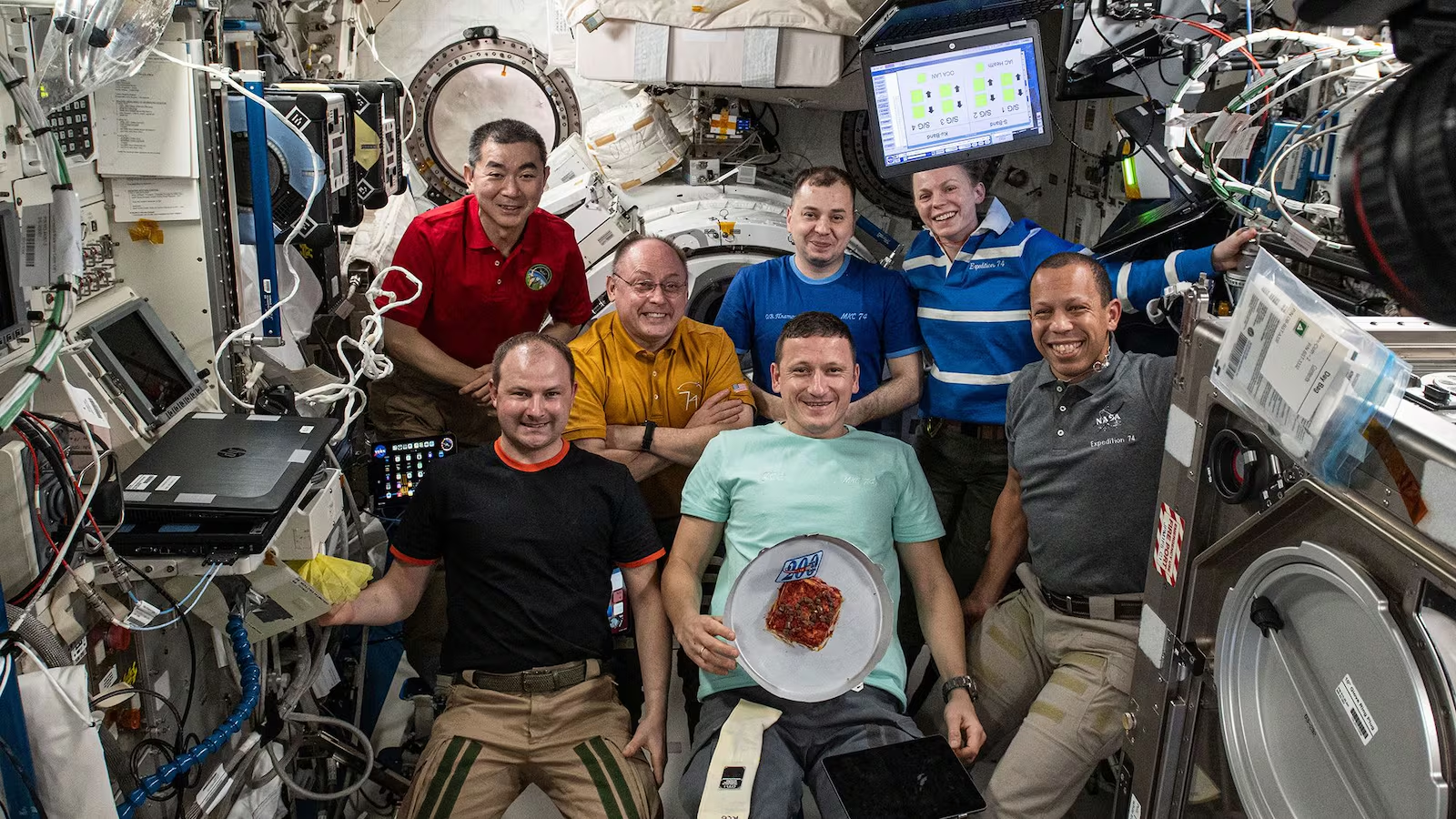
Space Crew Lands in Kazakhstan After 8-Month ISS Mission
A U.S.-Russian space crew lands in Kazakhstan on Sunday, wrapping up an eight-month stay aboard the International Space Station. The Soyuz MS-28 capsule touched down safely by parachute in the steppes southeast of Dzhezkazgan. NASA astronaut Chris Williams and Russian cosmonauts Sergei Kud-Sverchkov and Sergei Mikaev made up the returning crew. Their mission marks another chapter in the long-running space partnership between the two nations.
A Smooth Landing in the Kazakh Steppe
The Soyuz capsule descended through the atmosphere right on schedule. Its parachute opened as planned, and the crew landed gently in the designated recovery zone. This touchdown ended a 241-day mission for the three spacefarers. Notably, the flight was the first spaceflight for both Williams and Mikaev, while Kud-Sverchkov completed his second trip to orbit.
Recovery teams quickly reached the capsule after landing. Helicopters then carried the crew to Karaganda for medical checks and initial debriefing. From there, Williams boarded a flight back to NASA’s Johnson Space Center in Houston. Meanwhile, Kud-Sverchkov and Mikaev traveled onward to their training base in Star City, just outside Moscow.
Soyuz spacecraft have carried crews safely to and from orbit for decades. This latest landing continued that steady track record. As a result, all three astronauts returned home without incident after months of demanding work in space.
Life Aboard the International Space Station
During their eight months in orbit, the crew worked alongside four other astronauts as part of Expedition 74. The full team included JAXA astronaut Kimiya Yui, NASA astronauts Mike Fincke and Zena Cardman, and Roscosmos cosmonaut Oleg Platonov. Together, they carried out research, maintained station systems, and even gathered for a group portrait inside the Kibo laboratory module back in December.
Russia and the United States were once bitter rivals during the Cold War space race. Even so, both countries have continued cooperating closely aboard the space station. Tensions between Moscow and Washington grew sharply after Russia sent troops into Ukraine in 2022. However, the two nations kept flying joint missions, with astronauts and cosmonauts traveling to orbit aboard each other’s spacecraft.
This continued teamwork shows how the International Space Station has remained a shared project despite political friction on Earth. Consequently, the station still functions as one of the few places where U.S.-Russian cooperation carries on almost uninterrupted.
A New Crew Continues the Mission
On July 14, a fresh crew launched from the Russia-leased Baikonur Cosmodrome in Kazakhstan. NASA astronaut Anil Menon and Roscosmos cosmonauts Pyotr Dubrov and Anna Kikina lifted off aboard Soyuz MS-29. Shortly afterward, they arrived at the International Space Station to begin their own eight-month mission.
NASA Administrator Jared Isaacman attended the launch in person. Interestingly, this marked the first visit to Baikonur by a sitting NASA chief in eight years. The visit highlighted the ongoing importance of the U.S.-Russian space partnership, even amid broader geopolitical strain between the two governments.
The newly arrived astronauts have since joined Expedition 75 aboard the station. This expedition also includes NASA astronauts Jessica Meir and Jack Hathaway, European Space Agency astronaut Sophie Adenot, and Roscosmos cosmonaut Andrei Fedyaev. Together, this seven-member team will now carry forward the station’s ongoing research and daily operations.
Looking Ahead for the ISS Program
The safe return of the Expedition 74 crew highlights decades of steady cooperation between the U.S. and Russia in space. Meanwhile, Expedition 75 has already begun its own chapter aboard the orbiting laboratory. Crew rotations like this one keep the station staffed and its research programs running without interruption.
As missions continue to rotate, the International Space Station remains a rare example of international teamwork rising above tensions on the ground. Ultimately, each safe landing and launch adds to a long record of shared achievement between spacefaring nations.