Vancouver Concert Halls: Four New Venues Proposed for Downtown Core
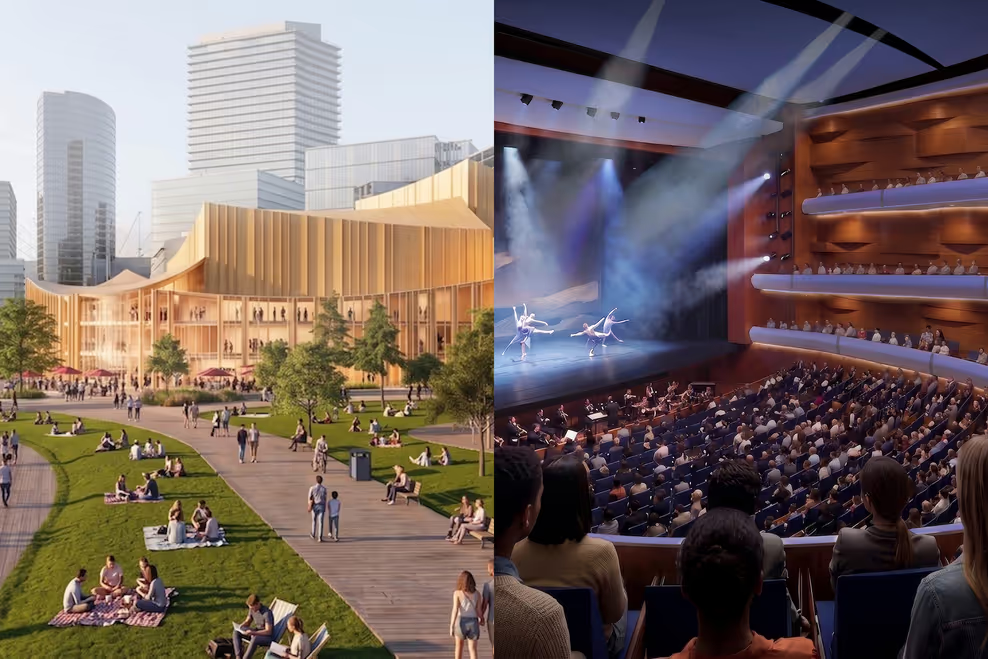
Vancouver could soon get a major upgrade to its performing arts scene. A coalition of 32 performing arts organizations has revealed plans for four new or heavily renovated venues across Downtown Vancouver. The proposed Vancouver concert halls project marks one of the city’s most ambitious cultural investments in decades.
The plan comes from the not-for-profit Vancouver Concert Hall and Theatre Society. It calls for a connected network of purpose-built spaces. These venues would range from an intimate 400-seat hall to a massive 2,000-seat theatre. Together, they would finally give Vancouver a full “venue ladder” for music, dance, opera, and theatre.
Four Possible Locations Across Downtown Vancouver
City officials have identified four potential sites for the new cultural precinct. These include the Robson Square area, home to the existing Vancouver Art Gallery. Another option is the Queen Elizabeth Theatre plaza, already a hub for large productions.
The Larwill Park parking lot is also under consideration. This site would share its city block with the future Vancouver Art Gallery. Meanwhile, the Northeast False Creek waterfront rounds out the list as a fourth possible location.
A press conference held today drew municipal, provincial, and federal officials. All three levels of government spoke strongly in support of the vision. This kind of unified backing signals real momentum behind the project.
What the New Venues Would Include
The society developed this plan through a two-year feasibility study. Diamond Schmitt Architects led the research after being commissioned by the group. Several major arts organizations took part in shaping the proposal.
Participants include the Vancouver Symphony Orchestra, Vancouver Opera, and Ballet BC. Chor Leoni, Music on Main, DanceHouse, and the Vancouver Youth Symphony Orchestra also contributed. Their combined input shaped a vision built around flexibility and acoustic quality.
The smallest venue would seat 400 people. It would host chamber music, recitals, storytelling, and Cantonese opera performances. This space fills a gap for smaller, more intimate cultural events.
A second venue would offer 850 seats. It would suit dance, opera, choral shows, and smaller orchestral performances. Consequently, mid-sized productions would finally have a proper home downtown.
The largest additions include a 1,750-seat concert hall and a 2,000-seat proscenium theatre. The concert hall would become the new home of the Vancouver Symphony Orchestra. The theatre would include full stage infrastructure and an orchestra pit for large-scale opera and ballet.
Every venue would prioritize acoustics as a central design feature. At the same time, each space would remain flexible enough for different performance types. This balance reflects lessons learned from concert halls in other major cities.
Suzanne Anton, chair of the Vancouver Concert Hall and Theatre Society, called the plan historic. “This vision reflects a historic opportunity to give Vancouver’s artists and audiences world-class performance venues they have long deserved. By formally addressing the full venue ladder, from small to large, linked in one unified cultural precinct, we will unlock our city’s creative potential, supporting local artists, attracting world-class stars, spotlighting Indigenous performance, and transforming Vancouver into an international performing arts destination,” she said.
She also praised the cooperation shown by government leaders. “We are also deeply appreciative of the support shown across all three levels of government. This is a powerful signal of what becomes possible when culture is recognized as essential infrastructure,” Anton added. She previously served as BC Attorney General and as a Vancouver city councillor.
Why Vancouver Needs More Performance Space
Vancouver has fallen behind other major cities in venue capacity. The city offers just 0.52 music hall seats per 1,000 residents. In comparison, Toronto has 1.03 seats, while Melbourne offers 1.44 seats per 1,000 residents.
This shortage carries real consequences for local culture. As a result, touring productions often skip Vancouver in favor of Calgary or Seattle. Local performing arts groups also struggle to book suitable venues for regular shows.
Much of Downtown Vancouver’s existing infrastructure is now outdated. The Orpheum Theatre, for instance, opened back in 1927 as a vaudeville venue. It later became a movie theatre before the city restored and reopened it in 1977.
The Queen Elizabeth Theatre opened in 1959 and underwent a $45-million renovation in 2009. The Vancouver Playhouse, part of the same complex, dates back to 1962. Therefore, these aging facilities can no longer meet the city’s growing cultural demands.
Looking Ahead
The proposed Vancouver concert halls project could reshape the city’s cultural identity for generations. With strong government support already in place, the coalition now faces the challenge of choosing a final site. If realized, this cultural precinct would position Vancouver alongside other major international arts destinations.
Categories
Cities, Entertainment, Real Estate
3 words/phrases to link to these categories:
- “Downtown Vancouver” → Cities
- “performing arts organizations” → Entertainment
- “cultural precinct” → Real Estate
(Note: Per your instruction not to add links in the article text, these are listed separately rather than embedded as hyperlinks in the body copy above.)