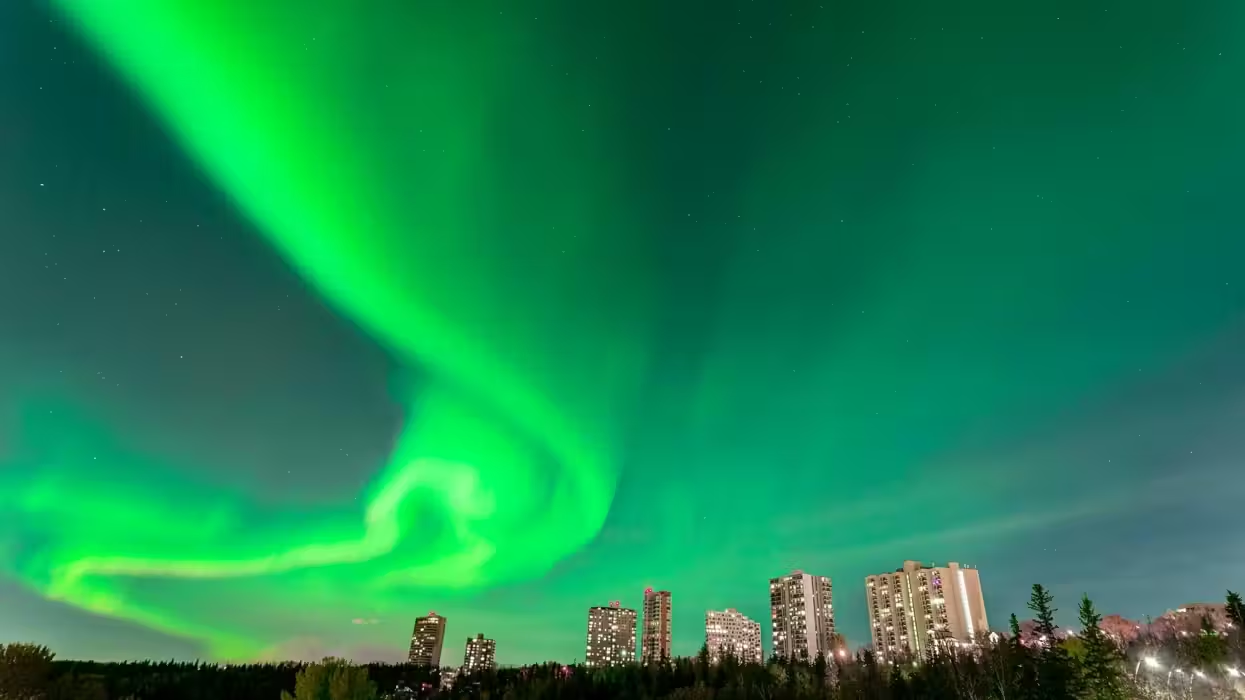
Northern Lights Canada Tonight: Aurora Could Be Seen Across the Country
Skywatchers are in for a treat because the Northern Lights Canada tonight forecast shows the aurora dipping much farther south than usual. People in many provinces could get a rare glimpse of the shimmering lights without travelling far from home. The dazzling display is tied to a burst of solar activity that is expected to peak overnight.
If you have ever wanted to see the aurora borealis but thought you needed to live in the far north, tonight might change that. Forecasters say the lights could stretch across a huge portion of Canada, from the territories down into the prairies and beyond. Even so, timing and location will matter a lot.
This guide breaks down where the aurora will likely be strongest, how to give yourself the best chance of spotting it, and why the northern lights glow in so many different colours. Whether you are an experienced aurora chaser or a first-time viewer, these tips should help.
Where the Aurora Will Be Most Visible Tonight
According to a northern lights forecast by NOAA, the aurora could be visible at night on Tuesday, July 21, into the early hours of Wednesday, July 22. That is because geomagnetic storms, which cause surges in the aurora and make it plunge south, are likely then. These storms happen when charged particles from the sun collide with Earth’s magnetic field.
A “more intense” aurora is forecast in northern and central parts of Canada, including Prince George, Whitehorse, Grande Prairie, Edmonton, Banff, Calgary, Yellowknife, Saskatoon, Regina, Churchill, Fort Severn, and the surrounding areas. Residents in these regions have the best odds of catching a vivid show tonight.
Meanwhile, the northern lights are expected to be less intense in Victoria, Nanaimo, Vancouver, Kelowna, Cranbrook, Lethbridge, Winnipeg, Kenora, Thunder Bay, Sault Ste. Marie, Timmins, Moosonee, Saguenay, and nearby places. However, a weaker aurora does not mean no aurora at all. On a clear, dark night, it can still be worth stepping outside.
NOAA also noted that the aurora does not need to be directly overhead for you to see it. In fact, the northern lights can be observed from as far as 1,000 kilometres away when the aurora is bright enough. So, that means you could see it even in places that are further from the aurora oval, like southern parts of Ontario and Quebec.
Because visibility depends on so many factors, it helps to check an updated aurora map before heading outside. Cloud cover, moonlight, and local light pollution can all change what you actually see. Still, tonight’s forecast gives a solid starting point for planning your aurora watch.
How to Improve Your Chances of Seeing the Northern Lights
If you want to see the northern lights tonight, the Canadian Space Agency’s aurora viewing tips can help you get the most out of the experience. Usually, the northern lights appear a few hours after sunset, then become more intense around midnight. Therefore, patience is often just as important as location.
First, you should find a place with little or no light pollution because bright city lights can make it difficult to see a less intense aurora. A rural field, a quiet park, or a lakeside spot away from streetlights works well. As a result, driving even a short distance outside a city can make a noticeable difference.
Next, when you are in a dark location, you should look all around because the northern lights can appear anywhere in the sky, not just directly above you or toward the north. Many people miss the display simply because they are looking in the wrong direction. Giving your eyes a few minutes to adjust to the darkness also helps.
Fortunately, you do not need any special equipment like a telescope or binoculars to see the northern lights in Canada. The naked eye is often enough, especially during a strong geomagnetic storm. That said, a camera with a long exposure setting can sometimes capture colours that are harder to notice in person.
Additionally, dressing warmly and bringing a blanket or chair can make the wait more comfortable, since the best views often come later at night. Checking the weather forecast beforehand is smart too, because clear skies are essential. Overall, a little preparation goes a long way toward a successful night of aurora watching.
What Causes the Northern Lights’ Different Colours
According to the Canadian Space Agency, the colours you see in the sky depend on the gases in Earth’s atmosphere, the altitude of the aurora, the density of the atmosphere, and the level of energy the aurora has. Consequently, no two aurora displays ever look exactly alike.
Green is the most common colour of the northern lights, but occasionally, the lower edge of the aurora will have a pink or dark red hue. This happens because charged solar particles interact with oxygen and nitrogen molecules at different heights above the ground. Higher altitudes tend to produce reds, while lower altitudes often produce greens.
Understanding this science can make the experience even more rewarding. Instead of just watching lights move across the sky, you can recognize why the colours shift and change in real time. For many viewers, that context turns a quick glance outside into a memorable evening.
Ultimately, tonight’s forecast offers a rare chance for people across much of Canada to witness the aurora without a long trip north. By finding a dark spot, staying patient, and looking in every direction, you can boost your odds significantly. Clear skies and a bit of luck are all that stand between you and a spectacular natural light show.