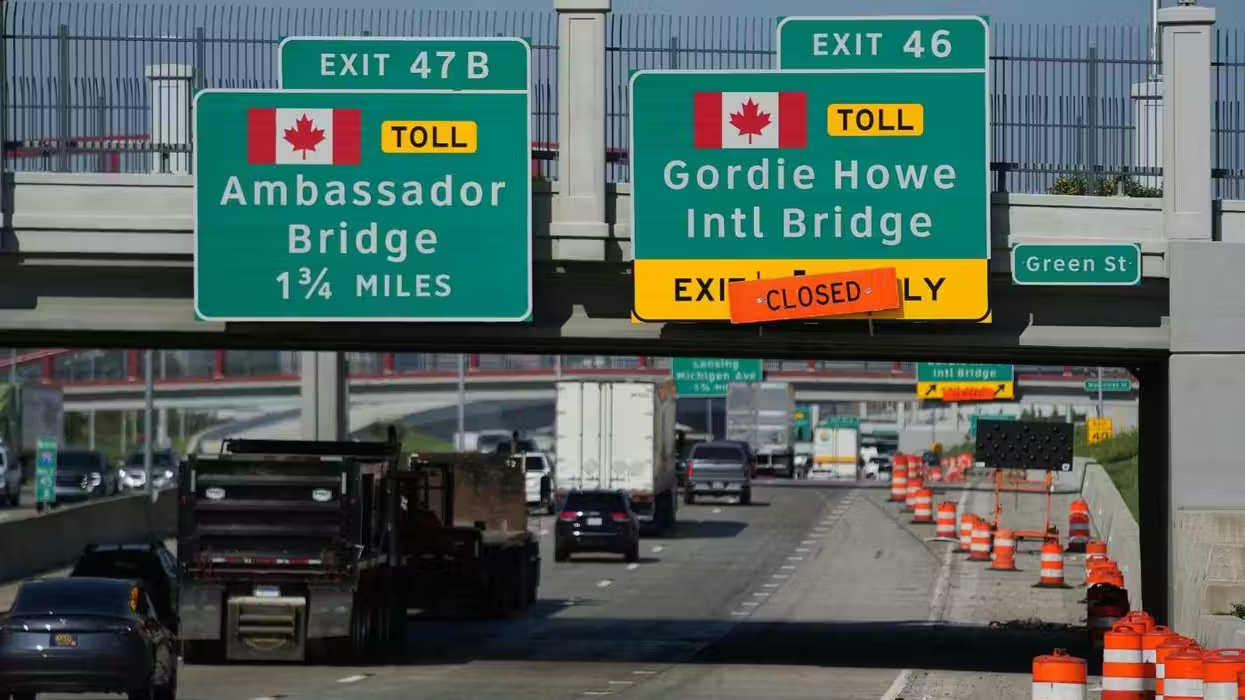
Gordie Howe Bridge Deal: Canada to Split Toll Revenue With U.S. for 15 Years
The Gordie Howe Bridge deal has finally been put into writing, and the text confirms what officials hinted at last week: Canada will share toll revenue with the United States. According to the proposed agreement in principle, Canada will hand over half of net toll revenues collected from the bridge to its American counterpart. This arrangement, however, comes with a strict time limit attached.
The deal specifies that this revenue-sharing setup will remain in place for the first 15 years of the bridge’s operation. After operational costs are deducted, the remaining net revenue will be split evenly between the two countries. This detail, now confirmed in the official agreement text, clears up earlier uncertainty about how the toll revenue would actually be divided.
What the Gordie Howe Bridge Deal Includes
The agreement, published on the Gordie Howe International Bridge website, lays out the financial terms of the cross-border project. Specifically, it confirms that Canada and the U.S. will divide net toll revenues after covering the bridge’s day-to-day operating expenses. This is a significant clarification for a project that has long involved complicated cross-border financing.
However, the published details make no mention of debt repayment terms. This is notable because Prime Minister Mark Carney had previously suggested that full toll-revenue sharing — not just the net revenue split — would only begin once “all of the debt is repaid.” The written agreement, at least so far, does not reflect that condition.
Therefore, a gap currently exists between what was said publicly and what appears in the official text. Meanwhile, questions remain about when, or if, that debt-related clause will be formally added to the agreement. Officials have not yet clarified this discrepancy.
Carney’s Comments on the Agreement
Speaking about the deal last week, Prime Minister Mark Carney framed it as a mutually beneficial arrangement. In particular, he emphasized that the agreement would help move the long-delayed project forward. “It’s a good deal for both sides, it gets things moving,” said the prime minister.
His comments suggest that beyond the numbers, the deal also carries symbolic weight. Indeed, the Gordie Howe Bridge has faced years of delays, and this agreement represents a concrete step toward finalizing its financial structure. Consequently, both governments appear eager to present the deal as a win-win outcome.
Still, Carney’s statement about the debt being fully repaid before toll revenues are split adds another layer to the story. So far, this condition has not appeared anywhere in the published agreement. As a result, it remains unclear whether this is an informal understanding or a term still being finalized.
What Happens After the Debt Is Repaid
The bridge’s toll revenue and its net revenue are treated differently under the current terms. For the first 15 years, only the net toll revenue — meaning revenue left after operating costs — is being split. Full toll revenue sharing, according to Carney, would only begin once the debt tied to the bridge is completely paid off.
Nevertheless, the absence of this debt clause from the written agreement raises a valid question. Is the debt-repayment condition simply understood between the two governments, or is it still being negotiated separately? Until an official clarification is issued, this remains an open point.
In the meantime, the confirmed 15-year net revenue split stands as the clearest, documented term of the deal. This structure gives both countries a defined financial framework to work with in the near term. Ultimately, more details may emerge as the agreement moves toward final approval.