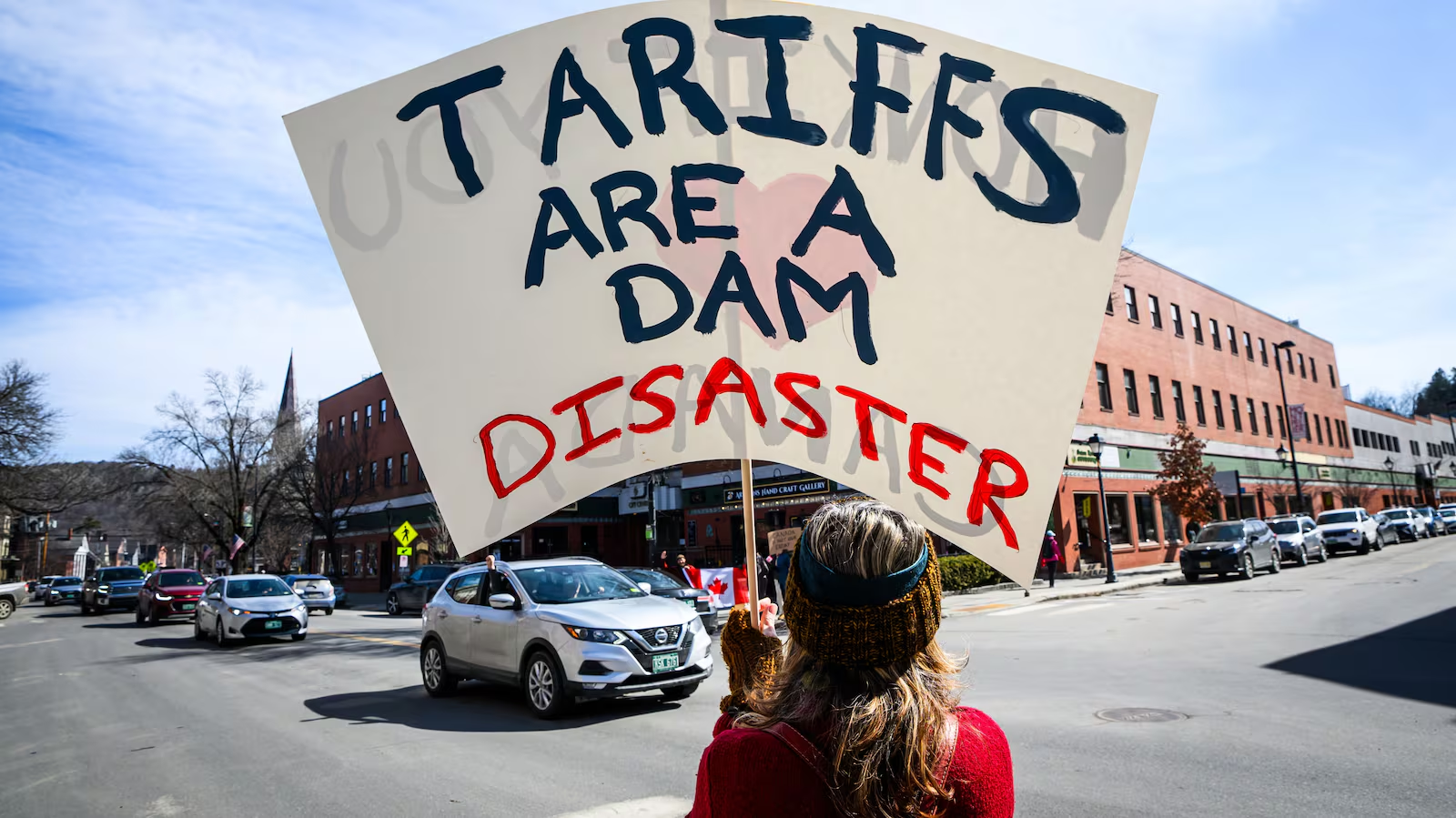
Canada Tourism Decline: Senator Warns Trade Czar Over Rising Tensions
The Canada tourism decline is becoming impossible to ignore. Vermont Senator Peter Welch confronted U.S. Trade Representative Jamieson Greer this week, demanding better relations with Canada. He revealed that visitor numbers to his state have dropped nearly 40 percent. This blunt exchange unfolded as tensions between Washington and Ottawa continue to climb.
Several senators grilled Greer on tariffs Wednesday. Their questions came right after President Donald Trump lobbed fresh threats at Canada. As a result, Canadian premiers gathered in Charlottetown to plan their next move.
Trump plans to impose 50 percent levies on a range of Canadian goods. He frames this move as retaliation against provincial bans on U.S. liquor sales. However, those provincial bans themselves responded to Trump’s trade regime and his repeated annexation threats. The president also pointed to Canada’s protections for its dairy industry.
Unlike earlier tariffs, these new duties carry no exemptions under the Canada-U.S.-Mexico Agreement, commonly known as CUSMA. They are scheduled to take effect on August 19. Consequently, businesses on both sides of the border are bracing for impact.
Trump’s Tariff Threats Escalate Tensions
The dispute traces back to a familiar cycle of retaliation. Trump’s trade regime and his talk of turning Canada into the 51st state sparked outrage across the country. Provinces responded by pulling American liquor from store shelves. In turn, Trump threatened even steeper tariffs.
Meanwhile, Prime Minister Mark Carney spoke directly with Trump on Tuesday. Both leaders reportedly agreed to intensify negotiations. Still, the rhetoric has not cooled. Additionally, Trump’s comments about Canadian dairy protections have added another layer of friction to an already strained relationship.
Notably, these tariffs stand apart from previous rounds. They apply broadly, without the usual CUSMA carve-outs. Therefore, industries that once felt protected now face real exposure. The August 19 deadline gives both governments little time to find common ground.
Vermont Feels the Economic Fallout
Senator Welch didn’t hold back during Wednesday’s hearing. He appealed directly to Greer, urging the administration to improve relations with Canada. His reasoning was simple: tourism to Vermont has fallen nearly 40 percent, and the damage keeps spreading.
“A lot of that has to do with the rhetoric that the president has used,” Welch said. He pointed to Trump’s threats about statehood and his habit of calling the prime minister “governor.” These remarks, Welch argued, have real economic consequences for border communities.
The senator described the ripple effects in detail. Local businesses have already suffered layoffs, including an auto repair shop, a cheesemaker, and a brewery. In fact, overhead costs for some of these businesses have doubled. A sporting goods outlet in the state has even closed half its stores.
Welch emphasized what’s truly at stake for his constituents. “We really value our relationship with Canada both emotionally and financially, and economically,” he said. His comments reflected growing frustration among lawmakers in border states who are watching the Canada tourism decline hit their local economies hard.
Trade Czar Defends the Administration’s Position
Greer didn’t back down from Welch’s appeal. Instead, he defended the administration’s tariff strategy point by point. He framed the tariffs as a necessary response to Canadian trade barriers rather than an unprovoked attack.
“We’re fighting against a ban on American liquor on shelves,” Greer responded. He continued, “Were fighting against hard caps on export of American cars… we’re fighting against caps on American cheese.” His answer suggested the administration views these measures as retaliatory, not aggressive.
Meanwhile, the standoff leaves everyday people and businesses caught in the middle. Vermont’s tourism losses illustrate a broader pattern across northern border states. Similarly, Canadian premiers meeting in Charlottetown face pressure to respond firmly without escalating the conflict further.
The exchange between Welch and Greer captured a larger truth. Trade policy decisions made in Washington ripple outward into local economies almost immediately. As the August 19 deadline approaches, both sides face mounting pressure to find a resolution before the damage becomes permanent.
What Comes Next
Canadian premiers now face difficult choices ahead of the tariff deadline. They must weigh retaliation against the risk of further economic harm. Meanwhile, U.S. lawmakers like Welch continue pushing for a softer approach.
The Canada tourism decline may serve as a warning sign for policymakers on both sides. Border states depend heavily on cross-border visitors and trade. Therefore, continued hostility could deepen economic pain long after the political disputes fade.
For now, the relationship between the two countries remains tense and unresolved. Negotiations continue, but the rhetoric shows few signs of softening. Both governments will need to act quickly if they hope to repair ties before more damage occurs.