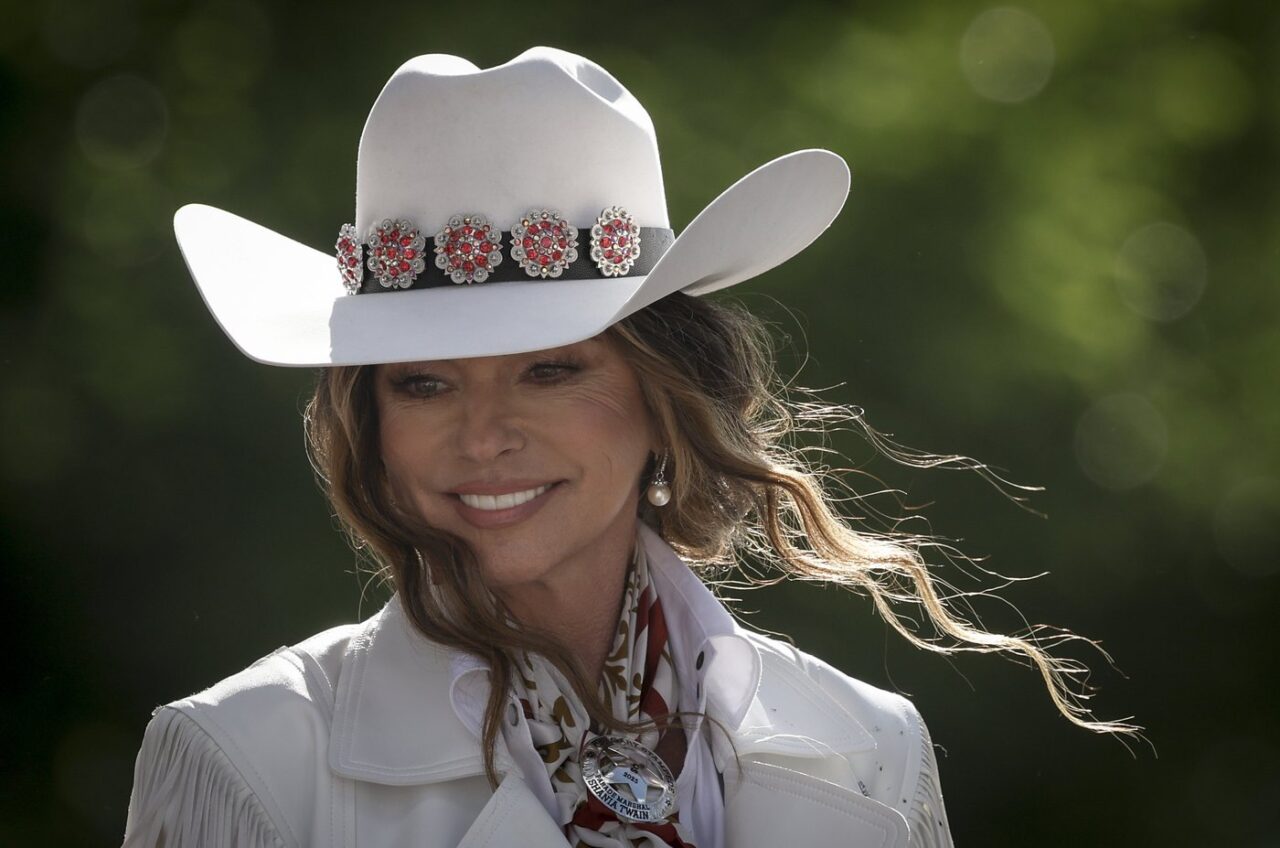
Shania Twain Northern Ontario Roots: Once She Dreamt of Leaving, Now She's Singing Its Praises
For years, Shania Twain couldn’t wait to leave northern Ontario behind. Growing up in Timmins, she dreamed of a life beyond the mining town where she spent her childhood singing in smoke-filled bars and honky-tonks. Today, however, the story looks very different. The Shania Twain northern Ontario connection has become the heart of her new music.
“When I was in that little town years ago, I just wanted to get out,” Twain tells The Canadian Press. “We all want to — we want to go out and discover the world. And I did that.” Indeed, she went further than most could imagine.
Twain became the queen of country pop, earning five Grammys and selling more than 100 million albums. As a result, she stands as one of the most successful crossover artists in music history. Even so, something has been pulling her back home.
Finding Her Way Back to Northern Ontario
Lately, Twain says she’s found herself looking back with fresh appreciation for the place that shaped her. “At some point, I realized that, well, I actually really love where I’m from,” says the 60-year-old. This shift in perspective now defines her latest chapter.
“I mean, I always did, but it was fun looking back on it,” she continues. “It’s almost like I forgot all about all of the snow that I’ve shovelled in my life, you know? Those things, all of those frozen toes. It’s sort of like, ah, I still love the winter.”
Her new album, “Little Miss Twain,” drops Friday. It offers a rootsy reflection of her life before international stardom. Specifically, it draws on songs she says she’s been writing for years about her northern Ontario upbringing.
“People don’t know enough about where I’m from,” says Twain, who has long lived in Corseaux, Switzerland, but still finds her way back home. “I love the northern winter. I love the spruce. I love the lakes — the black lakes, I call them. There are so many elements of nature there that I spent so much time writing in.”
According to Twain, she often took her guitar down to the banks of the Mattagami River with her dog to write. Over time, these tunes about her past began to add up. Eventually, they inspired the entire Little Miss Twain project. The album’s title even nods to the nickname she used as a child performer.
A Childhood Spent Chasing a Dream
That journey came full circle last week when Twain finally stepped onto the stage of Toronto’s storied Horseshoe Tavern — a venue she once envisioned playing long before fame took her elsewhere. Between songs, she reflected on the lengths her mother, Sharon Twain, went to help her perform as a kid.
“My dad would get very upset if we took the car, because then he wouldn’t have gas for work in the morning,” she told the packed house. “So what we did was, my mom and I, we rolled out of the driveway so he wouldn’t hear the engine start.” This small detail says a lot about her early sacrifices.
Twain has been open about her difficult childhood. In her 2011 autobiography, she wrote about emotional and physical abuse she said she and her mother experienced at the hands of her stepfather while growing up in poverty. Furthermore, her parents died in a car crash in 1987, leaving Twain to care for her three younger siblings.
There are hints of her modest beginnings on the snow-covered western track “Northern Town.” For the most part, though, Little Miss Twain is a nostalgic homecoming. The country star revisits her roots through a lens of affection rather than hardship.
“I miss the Cherry Blossom,” she says, referring to the discontinued Canadian chocolate candy. “I miss my mother. You wish you could have all of that again. And I do in this album: I have it all again, just the good parts. That’s the beauty of being a writer: you can be creative and just keep all the good bits,” she laughs.
It’s a Northern Thing
Twain describes the album as looking back on her past “with a glass half full.” “What it turned me into is an optimist,” she says, adding that her Timmins upbringing may have shaped that outlook. Consequently, resilience became a defining trait of her character.
“I don’t know whether it’s a northern thing, but maybe it is a characteristic,” she explains. “When that snow just keeps on coming, month after month, and it’s never stopping and you’re just out there shovelling every day just to get to the bus, in order to persevere and stay happy, you really do say, ‘I’m going to make the best of this, where I am.'”
Twain says it can be as simple as gathering around a fire with friends, sharing laughs and writing songs. “In the North, we don’t stay in the house all winter. We get out there. So you’ve got to be made of something different. You’ve got to find the joy in that. And I think I learned to do that by being from the Great White North.”
Meanwhile, “Faded Blue Jeans,” a swampy country-rocker inspired by one of Twain’s teenage relationships, features haunting backing vocals from Queens of the Stone Age’s Josh Homme. Producer Zach Dawes suggested him for the track. “I was like, ‘Are you kidding? Whatever he wants to do, that would be awesome,'” recalls Twain. “When I heard Josh’s voice on it, it was the exact edge that I was after.”
On the wistful title track, Twain sings about her mom’s dream of seeing her become “the next Tanya Tucker.” Notably, the American country star herself duets with Twain on those very lyrics. “My mother never lived to see my success at all,” says Twain, though collaborating with Tucker felt like a surreal full-circle moment.
“It was bringing her back into now through that reflection,” Twain says. “And she couldn’t have been more real or more there. I think of her every time I have any success, anything that I would be proud of her seeing.” For Twain, revisiting the past wasn’t about dwelling on what she lost.
Instead, it was about rediscovering what she loved. “You come to terms with a lot of things,” she says. “I was able to look back at all of those times with a smile.” In the end, her Shania Twain northern Ontario story has come full circle, from a girl who longed to leave to a woman who now sings its praises.