DIY Air Purifier: How to Build a Corsi-Rosenthal Box for Ontario Wildfire Smoke
Wildfire smoke can turn Ontario’s summer skies hazy within hours. When fires in Quebec and northeastern Ontario sent thick smoke drifting into the GTA, many residents felt the effects almost immediately. Kristin Iorio, who lives with asthma, could feel her chest constrict and her breathing become heavier. For people like her, a DIY air purifier can make the difference between a rough day and a genuinely dangerous one.
The good news is that cleaning your indoor air doesn’t require an expensive store-bought unit. Engineer Richard L. Corsi, dean of the UC Davis College of Engineering, helped popularize a simple box-shaped filter that anyone can build in under an hour. It’s known as the Corsi-Rosenthal box, and it has quickly become a trusted DIY air purifier solution during smoky, hazy weeks.
This guide explains exactly how the device works, what materials you’ll need, and why building one matters so much for Ontario households facing recurring wildfire smoke every summer.
What Is a Corsi-Rosenthal Box and How Does It Work
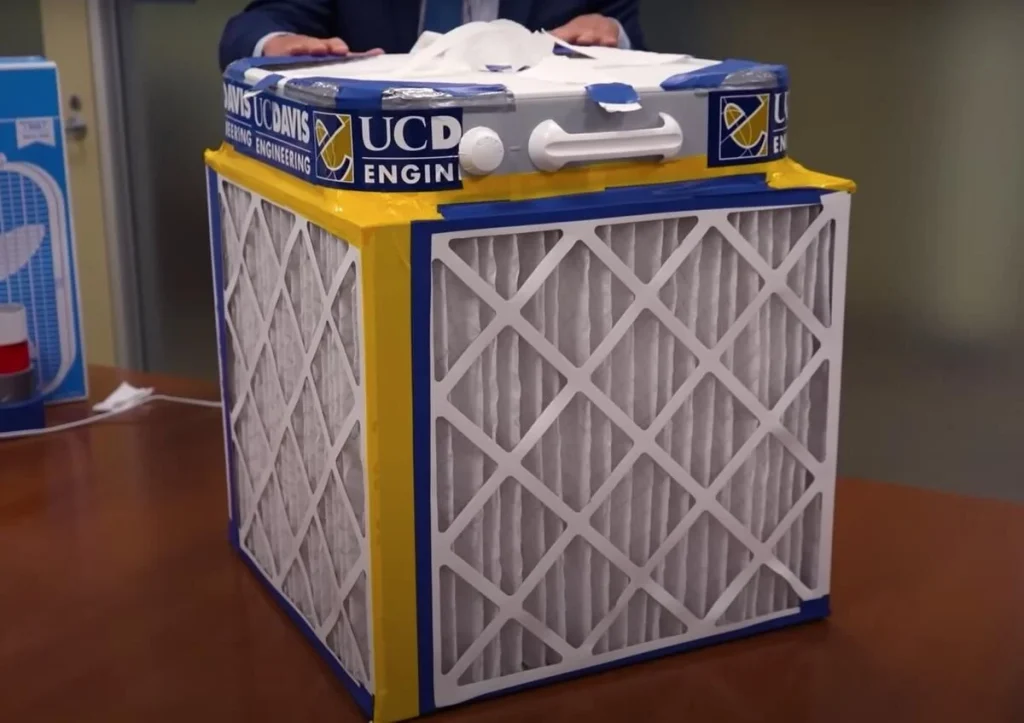
A Corsi-Rosenthal box is a homemade air purifier made from a standard box fan and a handful of furnace filters. Instead of air passing through just one flat filter, the fan pulls air through four or five filters arranged in a cube shape. Because of this, the device captures far more fine particulate matter than a single filter ever could.
The science behind it is simple. Wildfire smoke carries tiny particles known as PM2.5, which are small enough to enter the lungs and bloodstream. As a result, these particles trigger coughing, headaches, and serious complications for people with asthma or heart conditions. A well-built DIY air purifier traps most of this particulate before it circulates through your living space.
What makes this design so appealing is its efficiency. Independent testing has shown that a Corsi-Rosenthal box can filter air almost as effectively as commercial HEPA purifiers costing hundreds of dollars. Meanwhile, the total cost of parts usually stays under $100 CAD, depending on filter quality and fan size.
Because it’s built from accessible materials, this DIY air purifier has spread quickly through classrooms, offices, and homes across North America. It first gained attention during the COVID-19 pandemic as a tool for reducing airborne virus particles. However, its ability to filter wildfire smoke has made it just as valuable during Ontario’s increasingly smoky summers.
Step-by-Step Guide to Building Your Own DIY Air Purifier
Building this DIY air purifier takes only a few simple materials, most of which are available at any hardware store. Below is exactly what you’ll need before getting started.
Materials required:
- One 20-inch box fan
- Four MERV-13 rated furnace filters (same size as the fan)
- One additional filter or cardboard piece to use as the base
- Strong duct tape
- A box cutter or scissors
First, arrange the four filters into a cube shape, making sure the airflow arrows on each filter point inward toward the center. This orientation matters, since it determines whether the unit pulls air through properly. Next, tape the edges of the filters together tightly, sealing every seam to prevent air from leaking around the sides.
After the cube is fully taped, place the box fan on top with the airflow facing upward, pulling air out through the top rather than pushing it down. Then, tape the fan securely to the top edges of the filter cube so no gaps remain. Finally, seal the bottom of the box using cardboard or a fifth filter to stop unfiltered air from being drawn in underneath.
Once assembled, plug in the fan and set it to its highest speed. You should immediately notice airflow being pulled upward through all four sides. For best results, run the DIY air purifier continuously in whichever room you spend the most time in during smoke advisories.
A few safety notes are worth mentioning here. Always use a fan in good working condition, since older or damaged motors can pose a fire risk when run for long periods. Additionally, replace filters every few months, or sooner if you’ve used the unit heavily during a prolonged smoke event. Doing so keeps airflow strong and prevents trapped particles from building up.
Why This Matters for Ontario Residents During Wildfire Season
Ontario has experienced longer and more intense wildfire seasons in recent years. Consequently, Environment Canada now issues air quality advisories far more often than it did a decade ago. For households without central air conditioning or built-in filtration, a DIY air purifier offers one of the fastest ways to respond when smoke rolls in.
Vulnerable groups face the greatest risk during these events. Children, seniors, pregnant people, and those with asthma or COPD are especially sensitive to smoke exposure. Therefore, having a low-cost filtration option ready before smoke arrives can meaningfully reduce health risks for these groups.
Cost is another major factor driving interest in this approach. Commercial HEPA air purifiers can range from $150 to over $500 CAD, which isn’t accessible for every household. In contrast, a Corsi-Rosenthal box delivers comparable filtration for a fraction of the price, making clean indoor air far more attainable.
It’s also worth combining this DIY air purifier with a few additional precautions during smoke advisories. Keep windows and doors closed as much as possible, and avoid activities like vacuuming or frying food that stir up additional particles. If you must go outside, wearing a well-fitted N95 mask adds another layer of protection.
Finally, checking Ontario’s air quality index regularly helps you decide when to run your purifier at full strength. Apps and government websites update this information throughout the day, so you can react quickly as conditions change. Combined with a homemade filtration unit, this simple habit gives families practical, affordable control over their indoor air during wildfire season.
Final Thoughts
Wildfire smoke isn’t going away anytime soon, but protecting your home doesn’t have to be expensive or complicated. A DIY air purifier built from a box fan and a few furnace filters offers real, tested protection for a fraction of retail cost. With just an hour of assembly, Ontario households can breathe easier the next time smoke drifts across the province.