Ontario Wildfires Destroy Homes as Crews Battle Raging Flames
Ontario wildfires destroy homes across the province’s north, and fast-moving flames are forcing thousands of residents to flee. Crews are working around the clock to protect towns and First Nations directly in the fire’s path. Meanwhile, shifting winds threaten to push the damage even further into populated areas.
The situation escalated quickly this week. More than 180 wildfires are now burning across northern Ontario, according to Premier Doug Ford. As a result, several communities have already lost homes, buildings, and, in some cases, basic communication services.
Fast-Moving Flames Force Mass Evacuations
Evacuation orders are now in effect for multiple communities, including Armstrong, Lac La Croix First Nation, Whitesand First Nation, Gull Bay First Nation, and Lac des Mille Lacs First Nation. Consequently, families have had little time to gather belongings before leaving.
One fire in particular has caused severe destruction. A fast-moving blaze has damaged and destroyed homes and buildings on Namaygoosisagagun First Nation, also known as Collins First Nation, located north of Thunder Bay. Anishinabek Nation Grand Council Chief Linda Debassige confirmed the fire caused extensive damage there.
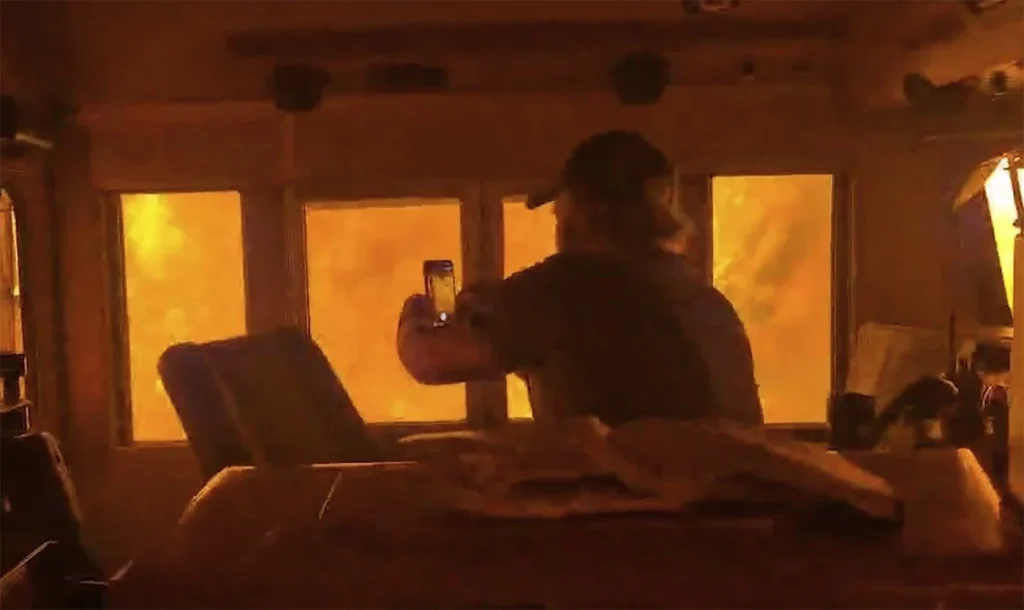
The danger became especially clear when a CN Rail crew found itself trapped near Armstrong. A video shared widely on social media shows their train surrounded by orange flames on both sides of the tracks. CN Rail later confirmed the crew’s safety in a statement: “CN has temporarily suspended rail operations near Armstrong, Ont., as a precaution due to wildfire activity in the area.” The company added, “As a safety measure, CN employees in the area and residents of the Town of Armstrong were evacuated Monday night.”
Sol Mamakwa, the NDP MPP for Kiiwetinoong, spoke about the footage in an interview from Thunder Bay. “I’m just glad that the CN workers are safe after this traumatizing experience that they had,” he said. He also stressed how disconnected the crisis can feel for people living far away. “I think the video really highlights the reality that people are facing on the ground. For many people, this feels far away, but it’s northern Ontario, northwestern Ontario, and it’s all too real.”
Mamakwa described the pace of the fires bluntly. “The situation is unprecedented,” he said. “The fires are moving fast.” Additionally, he noted that communities such as Cat Lake First Nation and McDowell Lake First Nation are being evacuated too, and several areas have lost telecommunications entirely.
Firefighters Battle More Than 180 Blazes Across the North
Despite the scale of the crisis, provincial leaders insist help is on the way. Premier Ford said fire crews are “hard at work” fighting the blazes and promised continued support for affected communities. In fact, the province had already allotted $150 million for emergency firefighting in its 2026-27 budget.
Still, some officials argue the response needs to move faster. Mamakwa criticized the lack of public comment from Prime Minister Mark Carney and Premier Ford on the unfolding disaster. “People’s lives, people’s homes are at risk, and … every possible measure needs to be taken by Ontario and Canada to keep our communities safe,” he said.
NDP Leader Marit Stiles echoed similar concerns after speaking with MPPs from the region. She called the wildfire scenes “terrifying” and said she has stayed in close contact with Mamakwa and others representing the affected ridings. Their comments reflect growing pressure on the government as the fires spread.
Smoke Blankets Communities as Winds Shift
Weather conditions are making the fight even harder. Environment Canada says Armstrong can expect widespread smoke today, along with wind gusts reaching up to 40 kilometres per hour. Therefore, crews are racing against both the fire itself and the weather pushing it forward.
The smoke isn’t staying confined to northern Ontario, either. Thick plumes have already drifted into Toronto, giving the city some of the worst air quality in the world earlier this week. From there, the smoke has continued moving south and east, affecting air quality across the Great Lakes region and parts of the northeastern United States.
For now, hot, dry, and windy conditions continue to fuel new fire growth across the region. Crews remain focused on containment, evacuation support, and protecting whatever homes and infrastructure they still can. As the situation develops, officials are expected to provide further updates on evacuation orders and firefighting progress.