Wildfire Smoke Air Quality Crisis Grips Cities Across Canada
Canadians in several provinces woke up to hazy skies this week as wildfire smoke air quality warnings spread across the country. Environment Canada issued alerts for multiple major cities on Wednesday, and the smoke shows no sign of clearing soon. From Ontario to British Columbia, residents are being urged to take the poor air quality seriously.
The Brunswick Creek wildfire is one of the key sources triggering these warnings in the Southern Interior. As a result, health experts are stepping in to explain the risks. Angela Yao from the BC Centre for Disease Control has been speaking about the dangers that wildfire smoke poses to public health.
Which Canadian Cities Are Under Air Quality Alerts
Smoke from wildfires burning in northwestern Ontario is causing very poor air quality and reduced visibility. Consequently, Environment Canada expects the hazy conditions to persist until Friday morning. A similar alert was also issued for parts of northern Manitoba, where poor air quality is expected to last until Thursday.
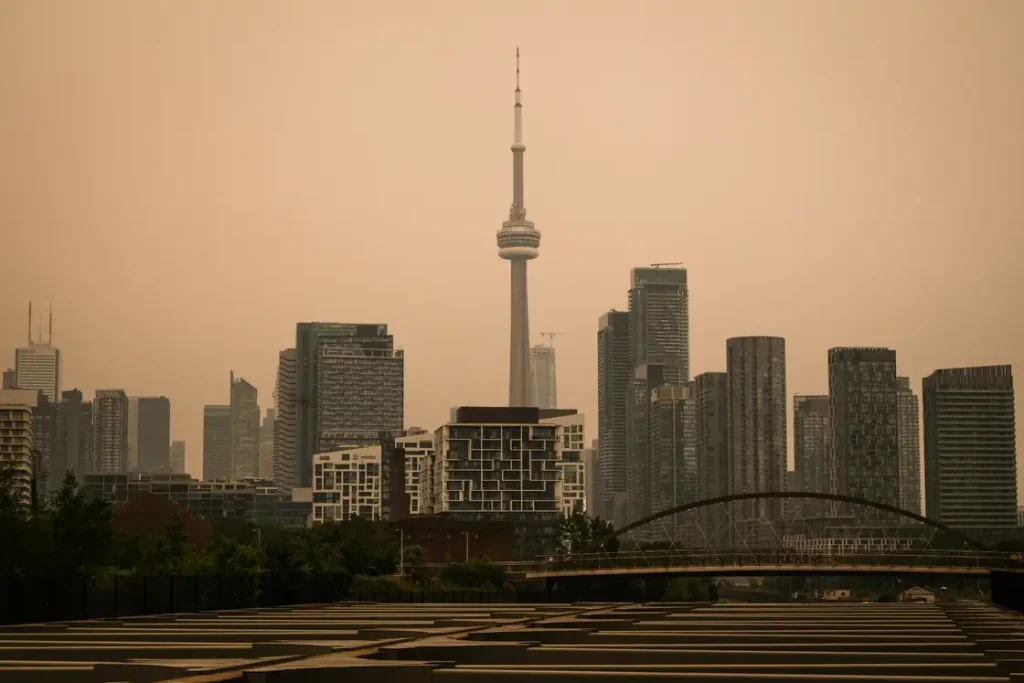
Meanwhile, a yellow alert covers Vancouver, and officials are asking residents to watch for wildfire smoke over the next 24 to 48 hours. Toronto, however, faced the worst conditions of all. In fact, the city recorded the poorest air quality among major cities anywhere in the world on Wednesday.
Yellowknife joined Toronto as the only other Canadian city sitting in the “high risk” category. Both cities scored a seven or higher on the Air Quality Health Index. Meanwhile, Edmonton and Fort Smith, Alberta, sat at “moderate risk” with a score of four. Fredericton followed closely behind at a score of five.
Understanding the Air Quality Health Index
The Air Quality Health Index, or AQHI, is a scale that runs from one to 10. It measures the risk that local air quality may pose to your health. A score between one and three counts as “low risk,” while four to six falls into the “moderate risk” range. Anything from seven to 10 is considered “high risk.”
During high-risk conditions, everyone’s health faces potential danger, regardless of age or existing health status, according to Environment Canada. Therefore, the agency is urging people across affected regions to limit their time outdoors. Additionally, officials recommend rescheduling or cancelling outdoor sports, activities, and events until conditions improve.
How to Protect Yourself From Wildfire Smoke
Certain groups face a higher risk from wildfire smoke than others. People aged 65 and older, pregnant people, infants, and young children all fall into this category. Similarly, anyone with an existing illness or chronic health condition, along with outdoor workers, should avoid strenuous activity outside.
Environment Canada also stressed the importance of seeking medical attention if symptoms appear. “When indoors, keep windows and doors closed as much as possible,” the agency said in its alert. It added, “When there is an extreme heat event occurring with poor air quality, prioritize keeping cool.”
For anyone who must spend time outdoors, a well-fitting mask can help. In particular, an N95 mask can reduce exposure to the fine particles found in wildfire smoke. Consequently, health officials recommend keeping one on hand during periods of poor air quality.
What Comes Next for Wildfire Season
Canada’s wildfire season has already proven to be a challenging one this year. Federal officials describe the situation as manageable overall, yet the smoke continues to disrupt daily life in several provinces. As a result, more air quality alerts could follow in the coming days.
Ultimately, staying informed remains the best defence against the health risks of smoke exposure. Checking daily AQHI scores, limiting outdoor exposure, and following updates from Environment Canada can help residents stay safe. Until the smoke clears, caution remains the safest approach for communities across the country.