Nuclear Renaissance Boosts Canada's Mining and Reactor Sectors
Canada’s nuclear renaissance is transforming the mining and reactor industries, bringing jobs, investment, and new uranium projects across Saskatchewan.
Nuclear Renaissance Brings New Life To Cameco Workers
Taryn Roske lost her job twice when the nuclear industry ground to a halt. She worked for Cameco, and hundreds of others were laid off from the company’s Rabbit Lake mine in northern Saskatchewan after it shut down in 2016.
“I had to sell my house,” Roske said in a recent interview. “I ended up taking a loss on that, because the housing market was in a horrible place.”
Four months later, she got a job at Cameco’s McArthur River mine and Key Lake mill. However, they stopped operating two years later, and more layoffs followed shortly after.
“They were able to give me that information (about the closure) ahead of time, so I could start applying for other jobs,” Roske recalled. She eventually found a position at the company’s Cigar Lake mine, where she still works today.
Still, she added, it was a stressful time for many in the industry. “I think people thought that it was kind of over and that we weren’t going to make a comeback. But in the last few years, it’s proved otherwise.”
Global Demand Fuels The Nuclear Renaissance
Following about a decade of stagnation, the nuclear industry is now experiencing what many call a nuclear renaissance. Countries across the globe, from China and India to the United States, are either building or promising to construct more nuclear power plants.
In Canada, the federal government has proposed 10 new reactors by 2040. Ottawa also wants to sell Canadian-made reactors to more countries while doubling uranium exports over the coming years.
Meanwhile, Ontario is building a small modular reactor at the existing Darlington station in Bowmanville, northeast of Toronto. Saskatchewan is also planning to construct a small reactor sometime in the 2030s.
Uranium remains the main fuel component in most nuclear reactors. The radioactive metal gets made into pellets that reactors use to create heat and generate electricity for millions of homes.
Saskatoon-based Cameco formed in 1988 following a merger between two Crown corporations. Today, it stands as one of the world’s largest uranium producers, benefiting directly from this renewed global interest.
Cameco Restarts Operations As Market Conditions Improve
Better market conditions have allowed Cameco to restart several key operations. In 2022, McArthur River and Key Lake resumed production after years of sitting idle.
Cigar Lake is also planning to start extracting uranium from a newer section of the mine in 2030. At Rabbit Lake, however, production remains suspended for now.
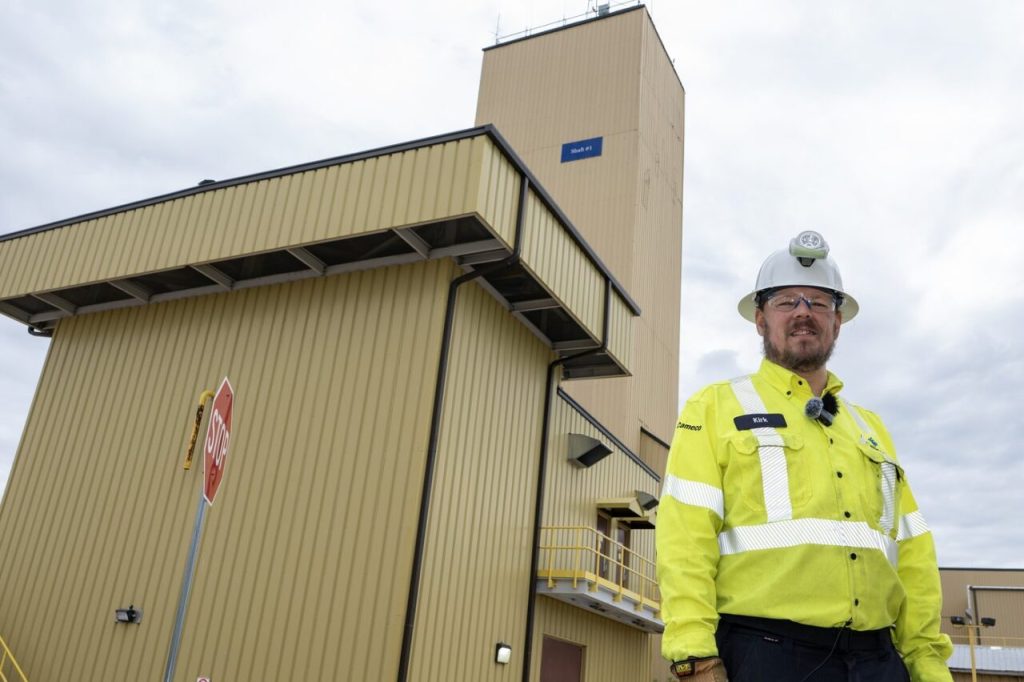
“The need for nuclear power — we see it,” said Kirk Lamont, general manager of Cigar Lake. “People are power hungry.” This growing demand continues to shape decisions across the entire sector.
Before its recent ascent, the industry’s downfall traces back to the Fukushima disaster in Japan. In March 2011, an earthquake triggered a tsunami that overwhelmed the Daiichi nuclear power plant.
The disaster caused meltdowns and explosions that released radioactive material into the environment. Consequently, the earthquake and tsunami killed about 22,000 people, and thousands more resettled elsewhere due to radiation.
Uranium prices plunged afterward, and public attitudes toward nuclear power soured significantly. “The world said, ‘We don’t need — we don’t want — this uranium. We don’t want nuclear power,'” Lamont recalled. “It was devastating to the people that work (at Cameco).”
Why Public Opinion On Nuclear Power Is Shifting
Peter Elder, chief scientific officer with Canadian Nuclear Labs, said public opinion started changing a few years ago for two main reasons. Countries want to reduce emissions while meeting growing electricity demands.
Nuclear power produces no emissions, though waste still needs safe storage. Additionally, countries want a reliable energy source they can fully control themselves.
For instance, nations using nuclear power handle disruptions to the oil and gas supply chain more easily. “Once you build (nuclear), it’s relatively safe from someone not turning off your tap nearly as easily as oil or natural gas,” Elder explained.
Some tech giants in the United States have also signed deals to power their data centres with nuclear energy. “They’re going to pay a bit of a premium for that, because they want really high reliability on their electricity, something that you can’t right now get from any renewable source,” Elder added.
Japan has cited energy security as a reason to reopen some plants, reversing an earlier promise to phase them all out completely.
Saskatchewan Mining Sector Capitalizes On The Comeback
In Canada, the mining sector is also capitalizing on this comeback. Two companies are currently building new mines in Saskatchewan to meet rising demand.
Denison Mines Corp. is working on the Wheeler River project, while NexGen Energy Ltd. is constructing its Rook I site. Production from both locations isn’t expected for another few years.
Still, Elder said there’s more than enough uranium to go around. All of Canada’s uranium mines sit within the Athabasca basin of northern Saskatchewan.
“If you look at the capacity in Saskatchewan, you could almost see that in the next few years it could triple,” Elder said. He added that Canada will need a strong workforce to build more reactors successfully.
The country may also face longer timelines to get new reactors constructed. Nevertheless, the momentum behind this nuclear renaissance shows no signs of slowing down.
What The Nuclear Renaissance Means For Investment
At Cameco, this revival could mean additional investment in future projects. “It’s those contracts that we sign that are going to enable us and backstop the investment in growing our production as we can,” said Cory Kos, Cameco’s vice-president of investor relations.
For Roske, the uranium resurgence has been nothing short of a “huge blessing.” She now sees real longevity in her career after years of uncertainty.
“It’s longevity in my career,” she said. “It’s given me 16 years now, and hopefully it’s long enough for me to retire.” Her story reflects the broader optimism now spreading across Saskatchewan’s nuclear workforce.