Michigan Republican Mike Rogers Breaks With Trump Over Canada Tariffs
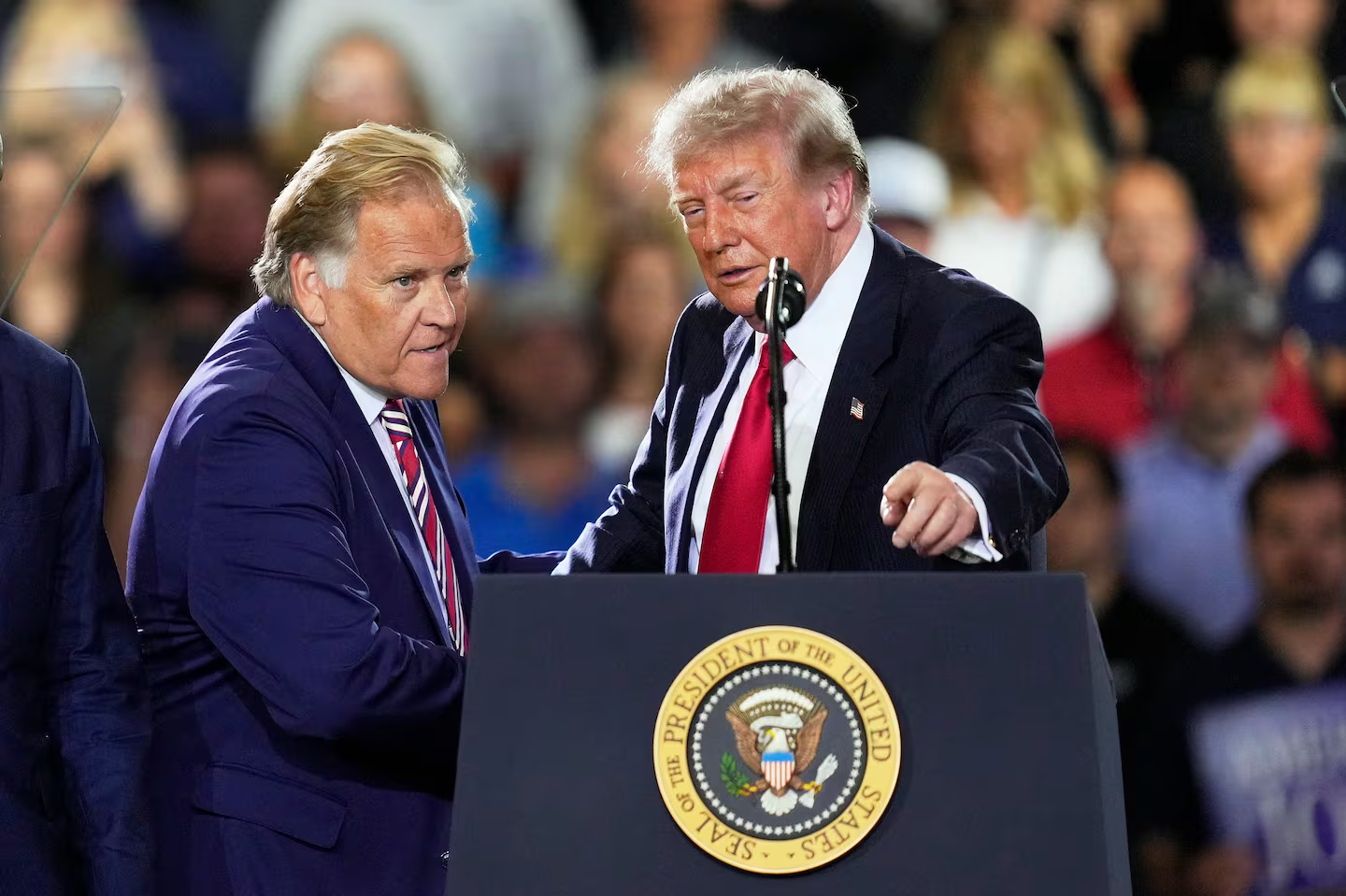
WASHINGTON — Michigan Senate candidate Mike Rogers has split with President Donald Trump on Canada tariffs. The Republican faces a tight race in a state that the trade war has hit hard. His new position could reshape the contest ahead of the midterm elections next month.
In a campaign ad posted on social media Wednesday, Rogers said people in Michigan “know that Canada is not our enemy.” He added, “We need to end this tariff war now.” The ad shows him sitting at a bar and holding a Labatt’s beer.
Rogers never mentions Trump by name in the ad. Even so, the message marks a shift for the former congressman. He previously said tariffs are necessary but not a one-size-fits-all solution.
Why the Mike Rogers Canada Tariffs Message Matters in Michigan
The trade war with Canada has become a ballot issue in the close race between Rogers and Democratic candidate Abdul El-Sayed. Michigan borders Canada, so the dispute hits close to home. The state’s economy is deeply integrated with many Canadian communities, particularly in the automobile industry.
The conflict escalated quickly after negotiations fell apart in August. Trump signed an order to rename Lake Ontario as Lake America. The United States then hit an array of Canadian goods with 50 per cent tariffs.
Ottawa responded a few weeks later with its own retaliatory duties. Last week, a U.S. import ban on some Canadian liquor, whey products and motorcycles officially took effect. As a result, the pressure on border-state voters keeps growing.
El-Sayed has made Canada a central election issue. He argues that Rogers backed the tariffs all along. Therefore, he calls the new ad a political move rather than a real change of heart.
El-Sayed Fires Back at Rogers
In a news release, El-Sayed said Trump is the reason for the trade war and the reason Rogers is running. He called his opponent “not a serious person.” He also took a shot at the beer in the ad.
“Must have had one too many of those Labatts, Mike,” El-Sayed said. He added that Rogers supported the tariff war “from the beginning.” According to El-Sayed, Rogers is “flip-flopping now” because his poll numbers “are in freefall.”
Rogers is not alone in creating distance from the president. More Republicans have distanced their campaigns from Trump as multiple polls show his approval rating dropping. Those polls point to the war with Iran, higher gas prices, inflation and controversial immigration tactics.
What Experts Say About the Senate Race
Matthew Lebo, a political-science professor at Western University in London, Ont., sees a broader trend. He said polls show a general shift towards Democrats compared to the 2024 election. Consequently, many Senate races are in play ahead of the midterms.
Democrats would need a net gain of four seats to win the Senate majority. The Michigan race could prove critical in that fight. Lebo described the state’s political balance in a text message.
“Michigan is as close to a 50-50 state as there is, having voted since 2008 for Obama, Obama, Trump, Biden and Trump,” Lebo said.
Lebo also noted that Rogers is not an incumbent. Because of that, it is harder to link him with all of Trump’s more contentious moves as president. This gives the candidate more room to maneuver.
“He can try to paint himself as an independent-minded Republican who will break with Trump when it’s the right thing for Michiganders,” Lebo said. “That’s a good strategy to get Republicans to the polls even if they are unhappy with Trump.”
Trump’s Support and the Road Ahead
Trump praised Rogers during a highly unusual Republican convention in Texas last month. The event was billed as “Trump-a-Palooza.” Rogers also spoke there, and he repeatedly criticized his opponent.
However, he did not address the trade war with Canada at the convention. His Wednesday ad therefore signals a clear change in tone. Voters will now judge whether the shift feels genuine.
With the midterms just weeks away, the Mike Rogers Canada tariffs debate will likely stay in the spotlight. Both campaigns see the border-state economy as a deciding factor. The outcome could help determine control of the Senate.