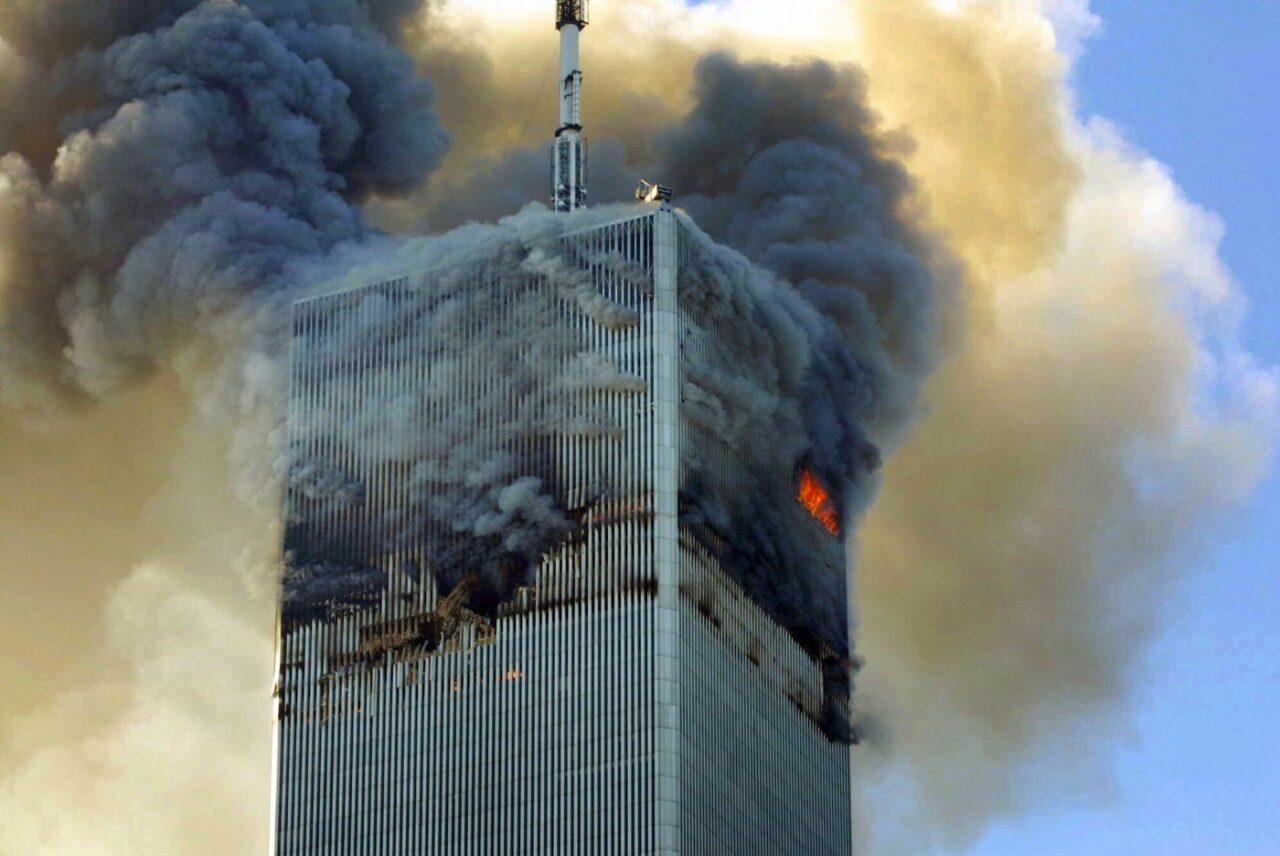
Airline Executives Recall 9/11: 'The World Was Changing Before My Eyes'
Twenty-five years on, the leaders who steered Canadian aviation through September 11 are still telling the story.
Airline executives recall 9/11 as the day their industry changed forever. Calin Rovinescu, later Air Canada’s CEO, was touring an art museum in Barcelona on his wedding anniversary when his assistant called with the news. He remembers standing in front of a Picasso, absorbing a piece of surrealist art, just as he learned of an equally surreal tragedy unfolding in New York.
Rovinescu rushed into the street and ducked into a café to dial into an emergency Air Canada meeting. As he put it, “The world was changing before my eyes, and the people around me had no clue what was about to happen.” That single afternoon reshaped Canadian aviation for the next two decades.
How Air Canada’s Leaders Learned the News
Then-CEO Robert Milton had just landed in London after a red-eye flight from Montreal when the attacks began. He and Rovinescu, who had hopped over from Spain, coordinated with executives back home. Consequently, both men found themselves racing to get back to Canadian soil while the rest of the world stood still.
With special clearance from Canadian, American and British authorities, Milton and Rovinescu flew home the next day in a business jet loaned last-minute by another company’s CEO. European airspace remained open, so the route was possible, but the skies felt hollow. Milton later described the flight deck as unusually silent, since the usual transatlantic radio chatter had vanished entirely.
Meanwhile, in Ottawa, decisions moved just as fast. Marie-Hélène Lévesque, then special assistant to transport minister David Collenette, was driving back from Montreal with her boss that same morning. Their airport conference had been interrupted by a wave of ringing cellphones as attendees learned what was happening. As Lévesque later recalled, “In that minivan, all the major decisions were taken.”
Collenette moved quickly, closing Canadian airspace within minutes of the Pentagon crash. Additionally, before his phone battery died, he ordered Nav Canada to turn back 270 transatlantic flights and reroute them to Europe. As a result, 224 more flights carrying roughly 33,000 passengers were diverted to 17 airports across the country in what became Canada’s largest-ever aircraft grounding.
Gander’s Response and a New Era of Airport Security
Gander, Newfoundland, absorbed 38 planes and about 6,500 stranded passengers, a story later immortalized in the Broadway musical Come From Away. Passengers reportedly waited on the tarmac for up to a full day, since customs and immigration staff needed time to screen everyone properly. Furthermore, many travellers did not learn what had happened until they landed, because pilots deliberately withheld the news to avoid panic in the air.
In the months that followed, governments poured billions into new security measures. Consequently, Canada created the Canadian Air Transport Security Authority, centralizing passenger screening that airlines had previously handled individually. Shoe removal, laptop checks and liquid restrictions became permanent fixtures of air travel almost overnight.
The Financial Fallout for Canadian Airlines
For airlines themselves, the aftermath was brutal. Air Canada relied heavily on U.S.-bound revenue, so the sudden collapse in transborder demand hit hard. The airline cut 6,600 jobs and posted a $1.25-billion loss in 2001 after losing hundreds of millions of dollars in sales during the fourth quarter alone.
Unlike their American counterparts, Canadian carriers received comparatively little government support. U.S. airlines collected roughly US$15 billion in grants and loan guarantees, whereas Canadian airlines received only about C$160 million in aid. Milton argued that this funding gap left Canadian carriers especially exposed to a destabilized market.
Canada 3000, then the country’s second-largest airline, could not withstand the pressure and filed for bankruptcy that November. Internationally, several other carriers folded too, including Ansett Australia and Swiss Air, while many legacy airlines later restructured under bankruptcy protection. Air Canada itself followed suit in 2003.
That restructuring, though painful, ultimately strengthened the airline. Over 18 months, Air Canada eliminated $13 billion in debt, much of it tied to its 2000 acquisition of Canadian Airlines. It also renegotiated agreements with more than half a dozen labour unions, trimmed its regional jet fleet, and pivoted toward higher-margin international routes, a strategy the airline still follows today.
A Shifting Competitive Landscape
Ironically, Air Canada’s struggles created an opening for competitors. As Air Canada worked through bankruptcy protection and rivals like Canadian Airlines and Canada 3000 disappeared, Calgary-based WestJet expanded its domestic network. According to aviation expert John Gradek, who teaches at McGill University, the shakeout effectively cleared the runway for WestJet to grow into Canada’s second-largest carrier.
Rovinescu later drew comparisons between 9/11 and the COVID-19 pandemic, another crisis that devastated air travel. However, he noted an important difference: 9/11’s disruption had a defined endpoint, whereas the pandemic’s uncertainty dragged on for years. Even so, both crises exposed the same underlying fragility in airline cost structures — and both proved the industry’s remarkable capacity to rebuild.
The Legacy of 9/11 for Canadian Aviation
A quarter-century later, the events of September 11 still shape how Canadians fly. From centralized airport security to the competitive balance between Air Canada and WestJet, the ripple effects of that single morning remain visible. For the executives and officials who lived through it, the memories, understandably, have never faded.