Trump Venezuela Oil Deal Sparks Backlash From Venezuelans Worldwide
The Trump Venezuela oil deal has triggered sharp criticism from Venezuelans across the political spectrum. Opposition leader Maria Corina Machado broke her silence this week, rejecting the agreement signed in Caracas. Meanwhile, ordinary citizens, oil industry veterans, and even some of Trump’s own allies are voicing unease.
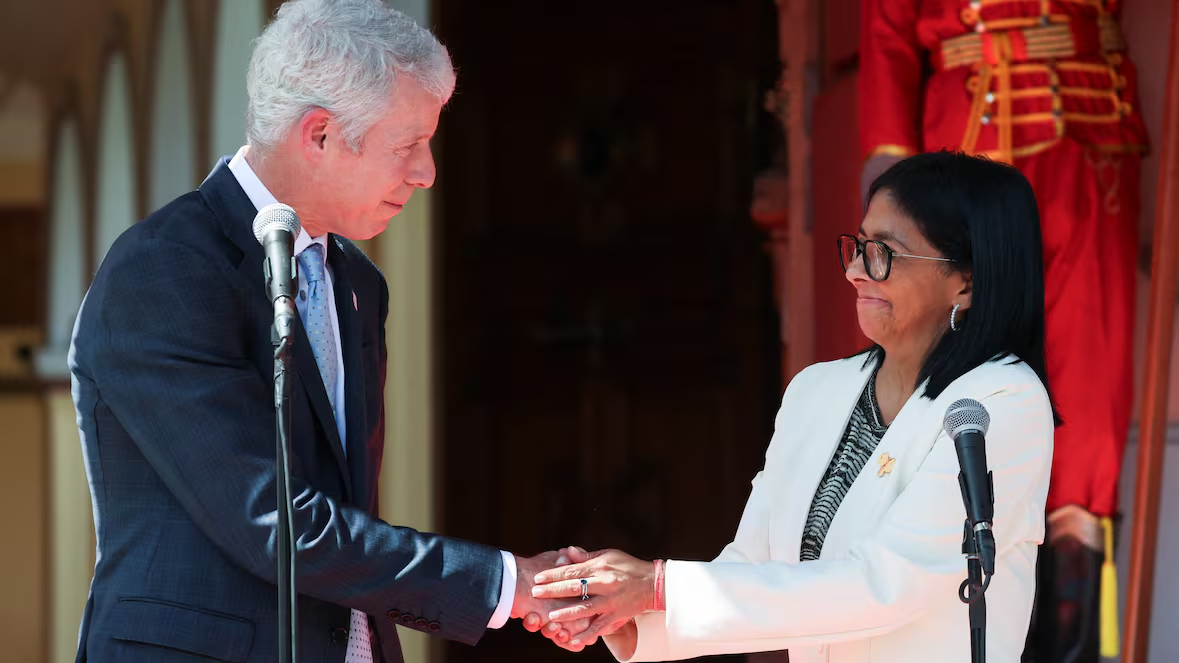
The deal, signed between the U.S. government and Venezuela’s interim president Delcy Rodriguez, promises Washington access to vast oil reserves. However, critics say it legitimizes an unelected government while ignoring the country’s political prisoners. The backlash spans continents, from Caracas to Toronto.
Machado Rejects the Trump Venezuela Oil Deal
Machado addressed her compatriots directly in a video statement on Thursday. She said, “I understand what you are feeling,” acknowledging the frustration many Venezuelans share. Additionally, she pointed to a familiar historical pattern of outsiders deciding Venezuela’s fate.
Her statement came a day after Trump praised the Rodriguez government without offering any timeline for democratic elections. Trump told reporters, “We are very happy with the president-elect that we have right now.” Rodriguez, notably, has never actually been elected to her post.
Machado argued that Venezuela’s oil sector genuinely needs foreign investment. Still, she insisted any deal negotiated by an illegitimate government lacks legal standing. Confusion over the agreement’s actual terms, she added, has only deepened public distrust.
Neither Trump’s social media posts nor Secretary of State Marco Rubio’s statements clarified how the 17 Venezuelan oilfields would be rejuvenated. The plan claims it will unlock 65 billion barrels of reserves. Yet basic operational details remain unexplained.
Reactions From the Venezuelan Diaspora
Venezuelan Canadians have responded with visible anger. Rebecca Sarfatti, co-founder of the Canada Venezuela Democracy Forum in Toronto, said, “It’s frustration, disappointment and rage.” She believes Trump exploited Venezuela’s oil wealth for his own political ends.
In contrast to the excitement over resource access, Sarfatti noted little interest in freeing political prisoners. She argues Rodriguez is simply playing along to secure her own grip on power. This sentiment echoes throughout the diaspora community.
Lino Carrillo, a veteran of both the Venezuelan and Canadian oil industries, sits on Machado’s energy advisory group. He warned, “Anybody that signs with Delcy will be exposed to transparency in the end.” Consequently, he expects future governments to review every agreement made under Rodriguez.
Carrillo also noted growing Venezuelan skepticism toward U.S. motives since Nicolas Maduro’s capture in January. He said people now judge leaders by actions rather than words. Trust, in his view, has eroded significantly since the raid on Caracas.
A Controversial Figure Behind the Deal
Critics have zeroed in on how the deal was negotiated. It involves a joint venture between the Pentagon and North American Blue Energy Partners, a private firm. Furthermore, the arrangement grants the State Department a right to 20 percent of production “at cost.”
The company traces back to Blue Energy, founded by Florida businessman Harry Sargeant III. Sargeant, a Trump golf partner and major Republican donor, previously conducted extensive business with the Maduro regime. He later sold his stake to Venezuelan businessman Alejandro Betancourt.
Betancourt has faced investigations over alleged money laundering tied to embezzled Venezuelan funds, though he has never been charged. Rubio defended his involvement by noting no wrongdoing occurred on U.S. soil. Nonetheless, this connection has fueled further distrust among Venezuelans watching the deal unfold.
Jorge Robles, who spent his career across Venezuelan and Albertan oilfields, acknowledged the country needs outside investment. Even so, he called the deal’s structure “highly irregular.” He explained that Washington negotiated on Venezuela’s behalf while directing benefits toward American companies.
Robles described the administration’s oil-first focus as “really upsetting and concerning.” He fears any revenue generated will simply reinforce the existing regime’s grip on power. Instead of accountability, he sees an arrangement that entrenches the status quo.
Fears of Creeping Colonization
Both Carrillo and Robles suspect the announcement targets American voters ahead of the midterms more than it targets real reform. They believe the deal is designed to suggest falling gas prices are imminent. Ultimately, oil markets are more likely to react to global supply shifts than distant investment promises.
Carrillo pointed out that any reopening of the Strait of Hormuz would move oil prices far more than Orinoco Basin plans. “The markets are not dumb,” he said, adding that traders are watching closely. He hopes to eventually return to Venezuela, but only once a democratic government ratifies any deal.
Sarfatti expressed a broader worry about her homeland’s sovereignty. She feels the situation is unfolding smoothly, almost invisibly, aided partly by Venezuela’s recent earthquake and its urgent need for outside help. Regardless, she stressed the assistance should not come from what she views as a colonizing power.
She added that the level of U.S. oversight over Venezuela amounts to a takeover. Longtime opposition leaders who spent decades working toward reform now find themselves sidelined. This, she argues, is the deal’s most troubling consequence.
Even within Rodriguez’s own party, cracks have appeared. Congresswoman Iris Varela claimed the deal was signed “under duress” and vowed to repudiate it once Trump leaves office. Meanwhile, some of the administration’s most loyal Venezuelan supporters have begun reconsidering their positions.
Final Thoughts
The Trump Venezuela oil deal has united an unusually broad coalition of critics: opposition leaders, oil executives, diaspora activists, and even chavista insiders. Their shared complaint centers on legitimacy, transparency, and priorities. In short, extracting oil has taken precedence over restoring democracy.
Whether the agreement survives a future democratic government remains uncertain. For now, it has deepened skepticism toward Washington’s role in Venezuela’s future. Many Venezuelans say they have seen this pattern before, and they are not encouraged.