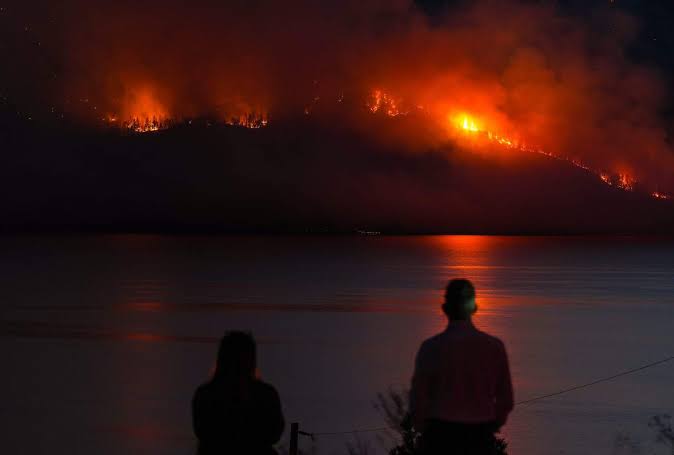
Canadian Wildfire Season "Accelerates Significantly" as Millions of Hectares Burn
The Canadian wildfire season has taken a dramatic turn this summer. Federal officials confirmed this week that fire activity nationwide has grown at an alarming pace, leaving communities on edge and firefighting crews stretched thin. More than four million hectares have already burned across the country, and the numbers keep climbing.
Minister of Emergency Management and Community Resilience Eleanor Olszewski and Minister of Indigenous Services Mandy Gull-Masty delivered the update on Tuesday. Their briefing painted a picture of a Canadian wildfire season that has shifted from manageable to genuinely worrying in just a few short weeks.
Wildfire Activity Intensifies Across the Country
Since the last federal update on July 9, the situation has changed considerably. Olszewski said “wildfire activity has really grown and accelerated significantly,” pointing to the sharp jump in burned land since midsummer. That single sentence captures how quickly conditions can shift once hot, dry weather sets in.
Officials also stressed that the danger is far from over. “We know that we’re still in the heart of the wildfire season and that some communities across the country face really difficult and sometimes uncertain conditions,” Olszewski said during the press conference. In other words, many Canadians should still expect disruption in the weeks ahead.
According to Natural Resources Canada, there are currently 582 active wildfires burning nationwide. Of those, 31 fires are classified as out of control. That figure alone shows just how much pressure crews and emergency responders are under right now.
Interestingly, the season did not start out this severe. Back on July 9, officials said that although conditions were “challenging,” the 2026 season had “not reached the scale seen in 2025.” For context, more than 8.3 million hectares burned across Canada last year, so the earlier comparison offered a bit of reassurance. That reassurance, however, did not last.
Olszewski explained that everything changed once July arrived. She noted that wildfire activity “really intensified in the month of July,” and added that “across the country, the wildfire season remains serious.” Consequently, what once looked like a calmer year has turned into one of ongoing concern.
Communities Face Uncertainty as Blazes Rage
The warning signs were actually present earlier in the year. On May 28, officials cautioned that “significant wildfire activity” was expected in British Columbia, according to the federal government’s wildfire season preparedness and outlook for 2026. That early forecast is now playing out in real time.
British Columbia has felt the impact firsthand. In Summerland, residents are slowly returning home as parts of the community reopen following the Bald Range wildfire. That fire continues to burn and has spread across more than 21,000 hectares so far. Roughly 150 structures have been destroyed or damaged as a direct result of the blaze.
For families in these regions, the road back is not simple. Homes need inspection, infrastructure needs repair, and many residents are still processing the disruption to their daily lives. Meanwhile, crews continue working to contain the fire before it threatens additional properties.
International Support Bolsters Firefighting Efforts
Given the scale of this year’s fires, Canada has leaned heavily on outside help. More than 500 international firefighters from Mexico, Australia, New Zealand, and Costa Rica are currently supporting operations in British Columbia. This kind of cross-border cooperation has become an essential part of modern wildfire response.
One traditional source of support, however, has less capacity to offer right now. Olszewski explained that “this year’s wildfire season is very intense in the United States as well, and particularly in Oregon and in Washington state. And so in terms of ability for the U.S. to provide firefighting assistance, it’s just not there.” As a result, Canada has had to widen its search for reinforcements well beyond its usual neighbor.
This shortage highlights a broader trend. As wildfire seasons intensify across multiple countries at once, shared resources become harder to secure. Therefore, nations increasingly need to build their own capacity rather than depend solely on assistance from allies.
What This Means Going Forward
The Canadian wildfire season of 2026 is a reminder that conditions can shift quickly, even after a season that initially looked less severe than the year before. Hot, dry stretches in July clearly played a major role in pushing burned areas past four million hectares.
For residents in affected provinces, staying informed remains critical. Local emergency alerts, evacuation notices, and air quality warnings can change rapidly during active fire periods. Consequently, checking official updates regularly is one of the simplest ways to stay safe.
Officials have not signaled that the danger is ending soon. Instead, their message has been consistent: conditions remain serious, some communities still face real uncertainty, and international cooperation continues to play a key role in the response. As the season progresses, further updates are likely to shape how the rest of 2026 unfolds.