Canada US Trade Deal: LeBlanc Says Job ‘Not Yet Done’ After Meeting
Canada and the United States are running out of time. With just two days left before Washington’s new tariffs take effect, negotiators are scrambling to reach a Canada US trade deal before the Aug. 19 deadline hits. Talks in Washington wrapped up Monday without a breakthrough, and Canadian officials made it clear the work is far from finished.
President Donald Trump has threatened tariffs as high as 50 per cent on a wide range of Canadian goods, from cement to hockey sticks. Unless negotiators can find common ground, these levies will officially come into force on Wednesday. As a result, pressure is mounting on both sides of the border.
LeBlanc: ‘Our Job Is Not Yet Done’
The meeting between Canada’s top negotiators and U.S. Trade Representative Jamieson Greer concluded Monday afternoon in Washington. However, Greer offered little insight to reporters waiting outside. When asked for comment, he simply said “no comment” on his way out.
Reporters then asked Greer for a few words in French. He replied, “bonne journée, Radio-Canada,” before continuing on his way.
Canada-U.S. Trade Minister Dominic LeBlanc emerged from the meeting shortly after. Speaking briefly to reporters, he said, “we’re going to continue working. Our job is not yet done.” He then got into a vehicle and left without taking further questions.
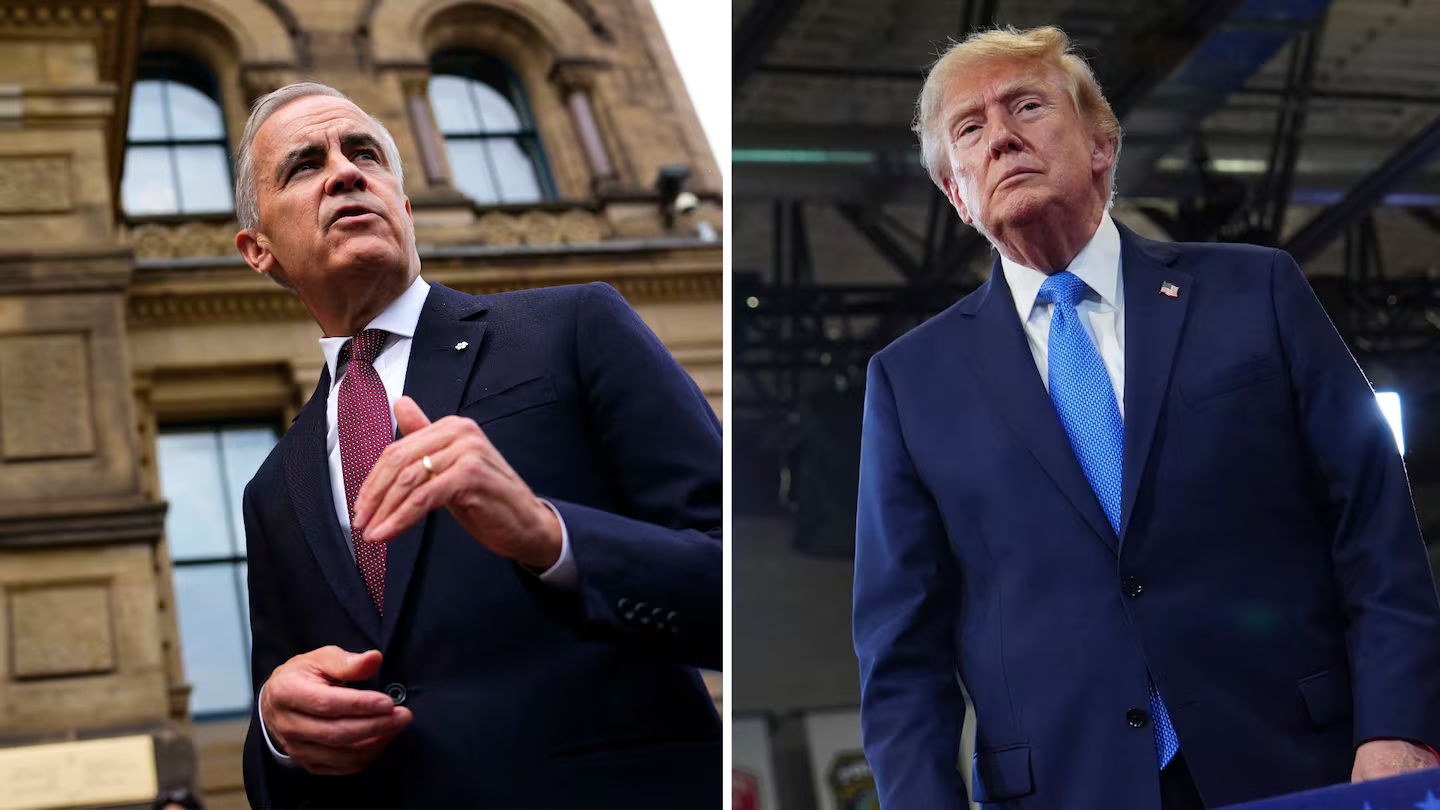
Meanwhile, Prime Minister Mark Carney addressed the ongoing negotiations during an announcement in St. John’s. He confirmed he expects to speak with Trump directly ahead of Wednesday’s deadline. When pressed for specifics on what a good deal would look like, Carney declined to elaborate.
Instead, he pointed to the days ahead as the right venue for those details. “We’ll have opportunities over the next 48 hours to discuss in more detail as the negotiations go forward, and I think that’s the best forum,” he said.
Political Pressure Builds Across Party Lines
The pressure isn’t limited to government negotiators. Conservative critic Shuvaloy Majumdar said Ottawa’s political class is united in wanting a deal, even while dealing with an “often unpredictable administration in Washington.”
In a statement released Monday, Majumdar didn’t hold back. “We have grown tired of seeing our country used as a punching bag. Yet we share a common hope that Prime Minister Carney will deliver a genuine win at the negotiating table,” the statement reads.
He also emphasized what’s at stake economically. According to Majumdar, “our negotiators have our full support in securing an agreement that lifts the tariffs and duties now weighing on our steel, aluminum, lumber and automotive industries,” affecting roughly 2.6 million Canadian workers.
Ontario Premier Doug Ford echoed similar sentiments during an address to the Association of Municipalities of Ontario. He stressed that his province is prepared for “any and every scenario.” Furthermore, he called for national unity throughout the process.
“This is why I have been pushing so hard for a united Team Canada response to this attack on Canadian workers, on Canadian sovereignty, Canadian communities. We need to stick together,” Ford said.
South of the border, U.S. Sen. Chuck Grassley offered a different take. He described Trump’s tariff threat as a “wake-up call to Canada to make some changes.” Still, Grassley voiced concern that talks shouldn’t damage the broader trilateral agreement known as CUSMA.
“These negotiations cannot be used as a way of destroying” the trade pact, Grassley warned in an interview at the Iowa State Fair.
Industry and Provinces Brace for Impact
The auto sector is watching closely, too. Flavio Volpe, a Team Canada trade adviser, said there remains a “gap” between Canadian and American negotiators. He predicted discussions could stretch right up to the deadline.
Currently, North American auto manufacturers are absorbing an effective tariff rate of at least 12.5 per cent, according to Volpe. If that rate climbs further, he warned, companies may simply give up rather than adapt.
“You won’t see them close doors tomorrow, but you’ll see a similar situation to what we see in Brampton right now,” Volpe told CTV News Channel. Notably, Stellantis is already considering closing its idled Brampton assembly plant.
Quebec is also feeling the strain. Premier Christine Fréchette met with agricultural leaders after two days of emergency meetings. She urged the federal government to protect the country’s supply management system for dairy, poultry, and eggs.
Quebec produces 37 per cent of Canada’s dairy output, supporting nearly 4,000 farms. Consequently, Fréchette insists this sector cannot be sacrificed during negotiations. “Quebec has been, so far, the most impacted province when it comes to the impact of the tariffs,” she said.
What Happens Next in the Canada US Trade Deal
With the Aug. 19 deadline fast approaching, all eyes remain on Washington. LeBlanc’s comments suggest talks will continue right up until the final hour. Meanwhile, Carney’s planned call with Trump could prove decisive in the coming days.
For now, industries and provinces alike are preparing for multiple outcomes. Whether a deal materializes or tariffs take effect, the next 48 hours will shape Canada-U.S. trade relations for months to come.