Canada-U.S. Trade Negotiations: A Sector-by-Sector Breakdown of Where Talks Stand
The Canada-U.S. trade negotiations remain deadlocked just days before a new round of steep tariffs is set to take effect. Canadian officials are racing to secure a deal that avoids President Donald Trump’s threatened 50 per cent tariff on hundreds of Canadian goods. However, after three weeks of intense meetings between top negotiators, both sides are still far apart on several key issues.
Sources close to the talks say Canadian negotiators fear there may be no way to prevent the tariffs from landing on Wednesday. Meanwhile, Ottawa is simultaneously trying to convince provinces to lift long-standing restrictions on American alcohol sales. The U.S. maintains that these tariffs are a response to what it calls Canadian discrimination against its automobile, dairy and alcohol industries.
With only two days left before the deadline, here is a closer look at where things stand across each major sector.
Key Sectors Under Negotiation
Automobiles remain one of the most contentious issues on the table. The U.S. has reportedly offered to cut its existing auto tariffs from 25 per cent down to 12.5 per cent. Canadian officials, though, consider that offer insufficient given the scale of the industry’s exposure.
Washington argues that Canada applies tariffs and quotas on American vehicles that it does not apply to other trading partners. Lana Payne, national president of Unifor and a member of Prime Minister Mark Carney’s advisory committee on Canada-U.S. economic relations, pushed back on this framing last week. “We can’t afford to give any more concessions here, and we need a good deal. And that means we’ve got to grind it out until the very end,” Payne said. Still, sources indicate Canada will likely need to offer some concessions before a final agreement is reached.
Dairy is another long-running sticking point. Trump has repeatedly criticized Canada’s supply management system, which allows a limited volume of American dairy products to enter tariff-free before steep duties kick in. The White House claims Canada’s tariff-rate quotas on U.S. cheese are “much more restrictive” than those applied to similar European Union imports.
U.S. Trade Representative Jamieson Greer echoed this criticism on Friday, stating “we have an uneven dairy treatment.” Sources say Canada will need to make concessions on dairy as part of any new deal, although the exact terms remain unclear. This is politically sensitive territory, particularly in Quebec, where officials have signaled strong resistance.
Alcohol restrictions have also become a flashpoint. Ottawa has told provinces to prepare to return American alcohol to store shelves if a deal is reached. So far, only Alberta and Saskatchewan, both of which have privatized retail systems, have resumed selling U.S. alcohol.
Other provinces have maintained their boycotts, and there has been ongoing disagreement over whether to lift them. Canadian negotiators reportedly view this as a significant obstacle, since the bans fall entirely under provincial jurisdiction rather than federal control.
Steel and aluminum tariffs, which currently range from 10 to 50 per cent, are another priority for Canadian negotiators. Ottawa wants Washington to lower these rates as part of any broader agreement. In response, the Carney government has rolled out several support measures for affected industries.
These include a $1-billion loan program through the Business Development Bank of Canada. Additionally, the federal government recently announced a $100-million program to cover half the cost of shipping Canadian steel by rail or water for one year. Transport Minister Steven MacKinnon hinted that an extension could be considered if funding runs out early.
Softwood lumber talks appear stalled entirely. Canada is pushing for relief from the 45 per cent tariff currently applied to softwood lumber products, but the U.S. side has shown little interest in discussing it. This dispute predates the Trump administration and was also unresolved during Joe Biden’s presidency.
According to sources, Washington views softwood lumber as a separate issue that should be negotiated independently. The looming tariffs are expected to hit items such as plywood, wooden doors and various lumber products, creating particular strain for British Columbia’s forestry sector.
Critical minerals, energy and security round out the list of major sticking points. The U.S. is seeking preferential access to Canadian critical minerals, along with broader commitments on energy and security cooperation. Canada holds significant reserves of lithium, nickel, cobalt and copper, and has been advancing production through a national strategy first released in 2022.
Earlier this month, Trump announced a $3-billion U.S. government investment in critical minerals and battery projects. The goal is to reduce dependence on Chinese supply chains while replenishing weapons stockpiles depleted by the ongoing conflict with Iran. Canada’s F-35 fighter jet purchase is also reportedly part of the broader conversation, with a federal review still underway.
Provincial and Political Pressure
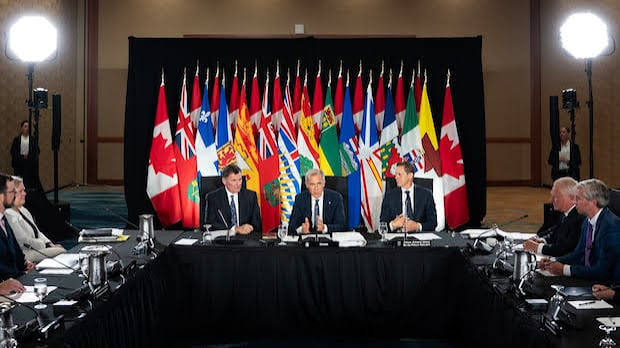
Provincial leaders are shaping the negotiations just as much as federal officials. Ontario Premier Doug Ford said he will only end his province’s alcohol boycott if negotiators secure a “fair deal” covering steel, auto, forestry, agriculture and manufacturing. “If we get a fair deal that will protect our steel sector, our auto sector, our forestry sector, agriculture sector, manufacturing sector, then we’d be more than happy to bring booze back on the shelves,” Ford said.
Quebec has taken a similarly firm stance. Premier Christine Fréchette said supply management is a red line for her province, noting that thousands of farms and jobs depend on the dairy industry. She has, however, expressed openness to allowing U.S. wine back on shelves if tariff relief is secured for sectors like aluminum and manufacturing.
In British Columbia, Premier David Eby has focused on softwood lumber, calling it one of the province’s biggest concerns. He said federal negotiators are “well aware” of how urgently the issue needs to be addressed. Meanwhile, provinces and territories have also been asked to prepare to drop retaliatory procurement rules favouring Canadian suppliers, should a deal come together.
On the defence side, National Defence Minister David McGuinty confirmed that Canada’s F-35 purchase is “being examined by our negotiating team.” He added, “The question of what is part and parcel of that negotiation continues. And I am hopeful we will come to a successful outcome in due course.”
What Comes Next
With the Wednesday deadline fast approaching, both governments face mounting pressure to strike a compromise. Canadian negotiators appear willing to make concessions on dairy and autos, yet they remain firm on protecting core industries from long-term damage. At the same time, Washington shows little sign of softening its position on softwood lumber.
For now, the outcome of the Canada-U.S. trade negotiations remains uncertain. Provinces, industry leaders and federal officials are all watching closely to see whether a last-minute breakthrough can prevent tariffs from taking a heavier toll on the Canadian economy.