Ontario Lithium Mine: First Site Could Open in Two Years
Ontario’s race to extract lithium is heating up. One company, Rock Tech Lithium, believes it could open the province’s first Ontario lithium mine within two years. Meanwhile, three other major companies are competing to unlock the region’s largely untapped lithium resources.
Rock Tech Lithium is pushing to bring its Georgia Lake project in northwestern Ontario into production. As a result, the company now finds itself at the center of a fast-moving development race.
“I believe it is the ideal time for it,” says the company’s CEO, Mirco Wojnarowicz, in an interview with BNN Bloomberg.
According to Wojnarowicz, the world has entered a “battery age.” Lithium batteries no longer power only electric vehicles; they also support energy storage systems for power grids and data centers.
Why Rock Tech Believes Canada Has an Edge
Wojnarowicz explains that his company is helping Canada build lithium production and processing capacity. This effort, he says, will reduce the country’s reliance on China for the critical mineral. Canada already ranks as the seventh-largest lithium producer in the world, so the raw materials are already there.
“What Canada also offers, in particular Ontario, is very competitive energy prices,” says Wojnarowicz. Because lithium processing requires both natural gas and electricity, this advantage matters significantly.
“If you want to process lithium, you require natural gas. You also require electricity, and Ontario is offering very good conditions for that,” he adds.
Rock Tech’s Infrastructure Advantage
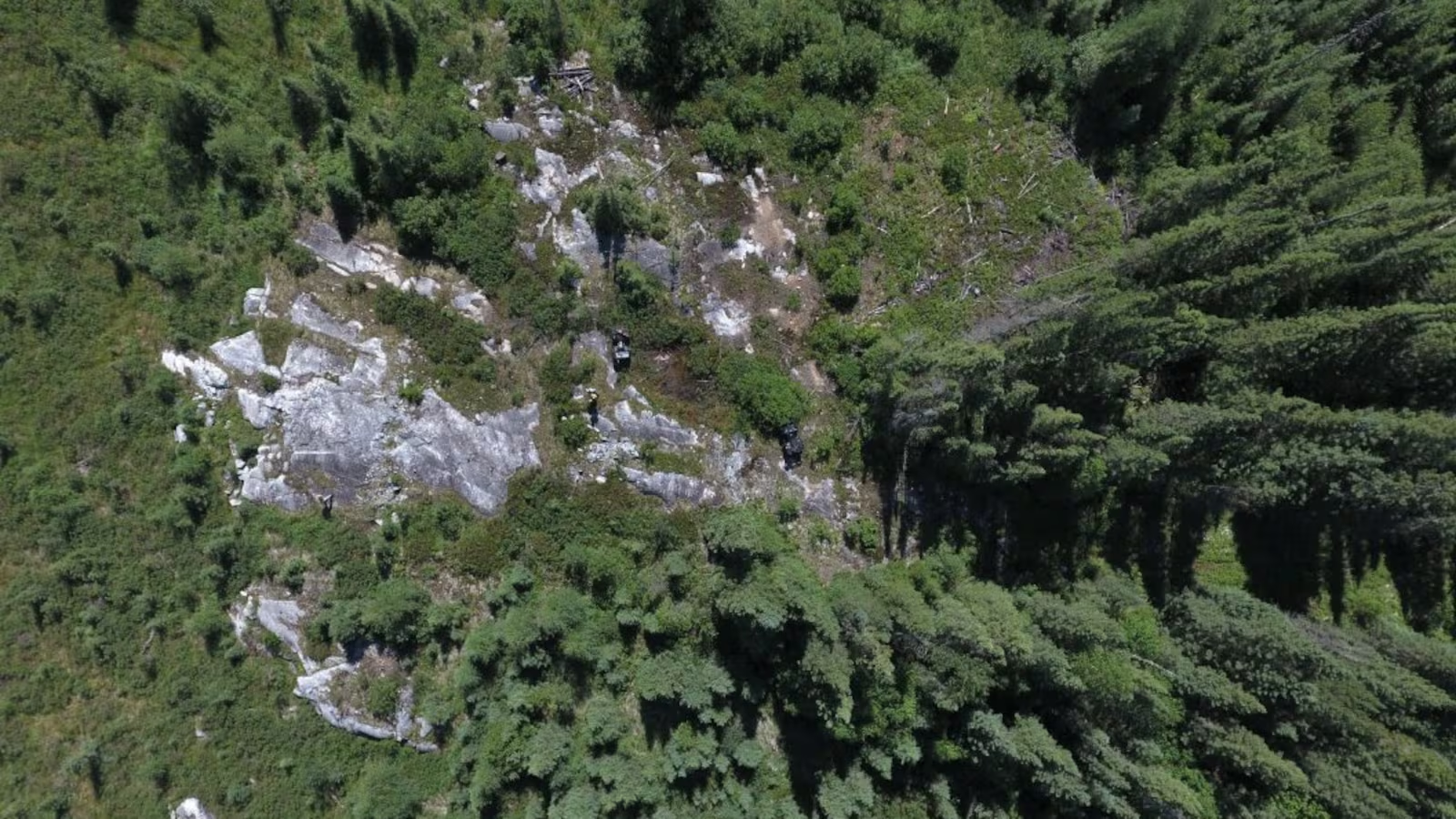
Much of the infrastructure Rock Tech needs already exists, which gives the company a real head start. The flagship Georgia Lake project sits near Beardmore, Ontario, right next to the Trans-Canada Highway. It also has access to high-voltage electricity lines.
“That, of course, saves a lot of time because we don’t have to build roads, we don’t have to build bridges, we don’t have to build rail tracks in order to get all material to our customers to the place where you want to process it,” says Wojnarowicz.
A preliminary feasibility study revealed more than 14 million tonnes of lithium oxide, and drilling has covered only 10 percent of the property so far. Because of these promising results, the company now plans to begin a definitive feasibility study later this month. That study should wrap up early next year.
Construction, Wojnarowicz says, could begin nine months after that. Consequently, Rock Tech is targeting initial production roughly two years from now.
“Given that timeline, we expect that we can be first to production in Ontario,” says Wojnarowicz.
Much of the lithium produced, he notes, could ultimately stay in Canada or get sold to allied economies.
A Crowded Field in Northwestern Ontario
At least four lithium projects are advancing in the region. These include Frontier Lithium, Green Technology Metals, Rock Tech Lithium, and Avalon Advanced Materials, according to Priya Tandon, president of the Ontario Mining Association.
“I think Rock Tech’s in a great spot,” says Tandon. “It’s just really positive to see that healthy competition.”
Rock Tech’s closest rival, Frontier Lithium, is developing its PAK project near Thunder Bay. That company has already secured letters of intent for $240 million in government grants. In addition, it became the first mine designated under the province’s One Project, One Process framework, which is designed to speed up mine development.
Rock Tech isn’t part of that fast-tracking initiative. However, Wojnarowicz says the company has already advanced its permitting work and strengthened relationships with Indigenous communities, which is helping speed things along.
Mining and Processing, Together in Ontario
Getting lithium out of the ground is only part of Rock Tech’s strategy. The company also wants to build an integrated Ontario supply chain, one where lithium is both mined and converted into battery-grade chemicals within the province.
Rock Tech already secured a $200-million anchor investment from BMI Group. This funding is advancing the planned Red Rock, Ontario, converter, which will process Georgia Lake spodumene concentrate into battery-grade lithium chemicals.
To achieve this, Rock Tech is applying the plant design from its German lithium converter project directly to Ontario. That facility currently transforms raw lithium into battery-grade lithium hydroxide for major automotive partners, including Mercedes-Benz.
Rock Tech also agreed to sell the planned production capacity of its Georgia Lake mine to Swiss trader Transamine. The deal runs for a seven-year term, with an option to extend it further. Notably, it also includes access to a development prepayment facility worth up to US$80 million.
“That is a very important milestone because it gives us kind of the commercial foundation for building our mining project,” says Wojnarowicz.
Tandon adds that all four major northwestern Ontario projects plan to move beyond simple extraction and into processing. “For me, processing is such a value-add in the province, for the province, for the country,” she says. As an example, she points to the Vale Base Metals and Glencore Canada facilities in the Sudbury Basin, which together generate $3.3 billion in direct annual GDP for Ontario.
Building a Mine Is Still the Hard Part
Despite the optimism, getting any Ontario lithium project into production remains genuinely difficult. “We talk about it sometimes taking up to 15 years to build a mine in Ontario,” Tandon says. Therefore, the association is pushing for faster, more predictable permitting as the province works to attract critical mineral investment.
A looming labour challenge adds another layer of difficulty. As more mines move toward development, they will increasingly compete for the same pool of skilled workers.
“If we’re going to be building more mines and expanding existing mines, we want to ensure we’ve got the talent in place,” says Tandon.
Even so, the momentum behind Ontario’s lithium sector is undeniable. With four major projects advancing and growing demand for battery materials, the province’s first lithium mine may finally be within reach.