Canada July Jobs Report: 75,000 New Jobs Added, But Recovery Isn't Complete Yet
OTTAWA — The Canada July jobs report shows a surprising leap forward for the country’s labour market. Employers added 75,000 positions last month, far outpacing forecasts. However, economists say the economy still has a long way to go before the Bank of Canada considers raising interest rates.
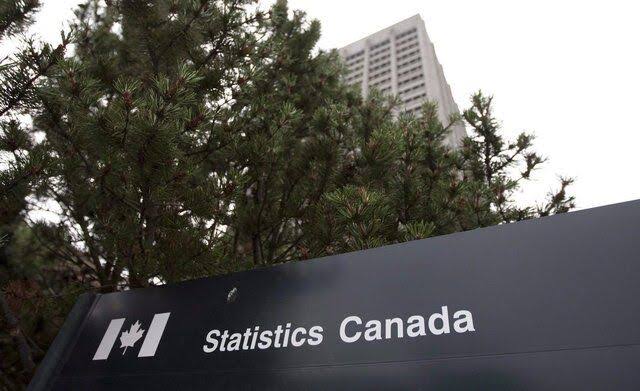
Statistics Canada released the data on Friday, and the numbers beat expectations by a wide margin. As a result, the unemployment rate dropped to 6.4 per cent, its lowest level in two years.
Job Growth Far Exceeds Forecasts
Economists surveyed by Reuters ahead of the release had predicted a modest gain of only 15,000 jobs. Instead, the Canada July jobs report delivered five times that figure, surprising analysts across the country.
The growth was balanced between full-time and part-time work. Ontario led the way, adding 52,000 jobs on its own. Meanwhile, the national economy is now up 181,000 jobs since April and 196,000 jobs compared to a year ago.
“It’s stronger growth than we were maybe anticipating a few months ago,” said CIBC senior economist Andrew Grantham in an interview.
“It is consistent with what we’re seeing in terms of the GDP figures that the Canadian economy is recovering, even though we do see that there’s more slack in the economy to go and this recovery will need to continue before we really have to worry about Bank of Canada interest rate hikes.”
The unemployment rate has fallen half a percentage point compared to last year. Consequently, more job seekers succeeded in finding work this July than during the same period in 2025.
Still, not everyone is calling this a full recovery. “The labour market is not yet strong,” RBC assistant chief economist Nathan Janzen said in a note to clients.
“The unemployment rate is still higher than normal, and wage growth slowed in July. But it has been improving despite still significant U.S. tariff uncertainty and higher energy prices.”
Wage Growth Slows Despite Strong Hiring
Wage growth, however, told a different story last month. Average hourly wages rose 2.8 per cent year-over-year in July. That said, this marked a slowdown from June’s 3.3 per cent growth rate.
Sector performance also varied widely across the country. The wholesale and retail trade sector added 21,000 positions, yet it remains down 50,000 jobs compared to a year ago.
Finance, insurance, real estate, rental and leasing companies added 18,000 jobs last month. Similarly, professional, scientific and technical services contributed another 17,000 positions to the total.
Not every sector saw gains, though. Public administration shed 15,000 jobs in July, while the agricultural sector lost 9,600 positions during the same period.
Desjardins managing director Royce Mendes noted that challenges remain ahead. “The latest jobs numbers add to the evidence that businesses are finding ways to navigate the current trade-related uncertainty,” Mendes said, adding a Bank of Canada interest rate hike isn’t likely to come until 2027.
“That said, even with the big gains seen in July, the labour market isn’t back to full health. As evidence of that, the annual pace of wage growth decelerated further … right around the rate of inflation.”
What This Means for Bank of Canada Policy
The Canada July jobs report arrives at a pivotal moment for monetary policy. The Bank of Canada held its key policy rate steady at 2.25 per cent for the sixth consecutive time at its mid-July meeting.
Looking ahead, financial markets are betting on continued stability. According to LSEG Data & Analytics, odds were about 96 per cent in favour of another rate hold at the Bank’s September 2 meeting.
Young workers also saw modest improvement in July’s data. The youth unemployment rate stayed nearly unchanged at 12.6 per cent, though this is down 1.9 percentage points from last year.
“This is definitely a better summer than what we’ve seen in the last two years for young people trying to find jobs,” Grantham said.
Overall, the Canada July jobs report paints a picture of gradual, uneven progress. Hiring is clearly accelerating, and unemployment is falling. Nevertheless, slower wage growth and persistent trade uncertainty suggest the recovery still needs time before it’s considered complete.