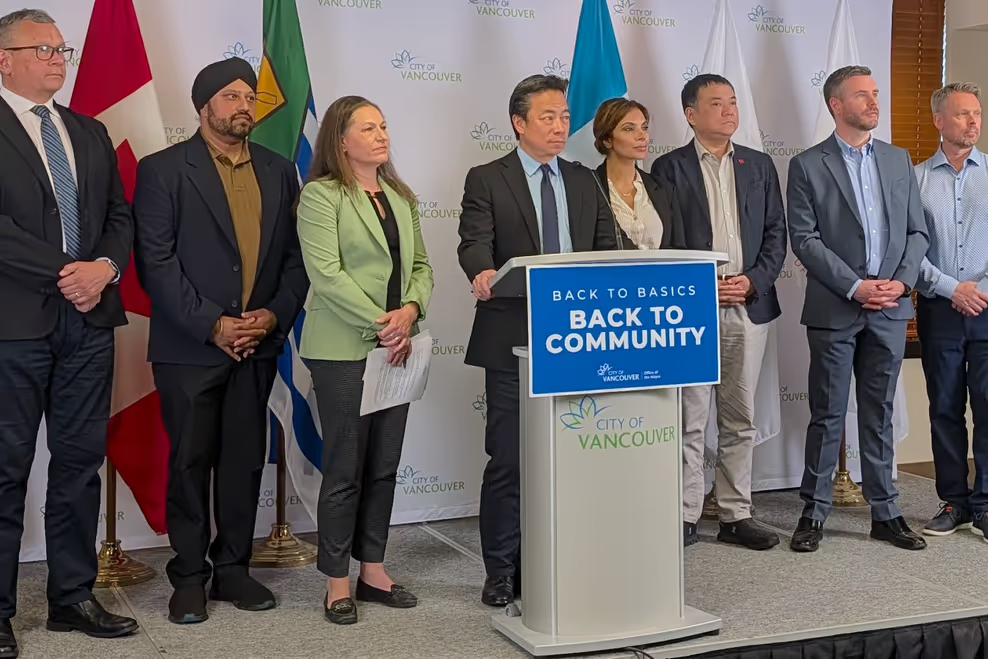
Ken Sim Homeowners Survey: Support Is Higher Than Among Renters
A fresh Ken Sim homeowners survey shows a clear split in how Vancouver voters view the mayor. Homeowners back Ken Sim more strongly than renters do. Meanwhile, the broader mayoral race still looks wide open, with more than a third of voters undecided. The numbers reveal a city divided along housing lines, and that divide could shape the outcome of the October election.
The poll, conducted by Pallas Data, surveyed 312 Vancouver adults between July 20 and 24, 2026. It was commissioned by the Conservative Electors Association, also known as the Vancouver Conservatives. Notably, this group has no relationship to the federal or provincial Conservative parties. The survey carries a margin of error of plus or minus 5.5 per cent, 19 times out of 20.
Mayoral Race Remains Tight Ahead of October Election
Green Party candidate Pete Fry currently leads the pack with 18.1 per cent support. Incumbent Mayor Ken Sim follows at 13.8 per cent, while Vancouver Liberals candidate Kareem Allam sits at 11.5 per cent. TEAM For a Livable Vancouver’s Colleen Hardwick trails close behind at 10.5 per cent.
Further down the list, COPE’s Stephanie Allen holds six per cent support. OneCity’s William Azaroff and Vote Vancouver’s Rebecca Bligh trail at 3.5 per cent and 2.9 per cent, respectively. However, the most striking figure is the 33.8 per cent of voters who remain undecided.
Because Fry’s lead over Sim falls within the survey’s margin of error, the race technically remains a toss-up. Age and gender also shape the results in interesting ways. Among women, Fry leads with 19.6 per cent, followed by Allam at 15.5 per cent. Sim ranks fourth among women, at just 8.9 per cent.
Among men, the pattern flips. Sim leads with 19 per cent support, narrowly ahead of Fry at 16.5 per cent. Older voters also favor Fry more strongly; he earns 24.4 per cent support among those 65 and older, compared to Sim’s 20 per cent in that same group.
The election is scheduled for Oct. 17, 2026, giving campaigns roughly three months to sway undecided voters.
Homeowners Back Sim, Renters Favor Fry
The homeowner-renter divide stands out as one of the survey’s clearest findings. Among homeowners, Sim edges ahead with 18.3 per cent support, just above Fry’s 16.8 per cent. Hardwick follows at 11.5 per cent, with Allam close behind at 10.7 per cent.
Among renters, though, the picture changes dramatically. Fry leads comfortably with 19 per cent support, while Allam and Hardwick trail at 11.5 per cent and 9.6 per cent. Sim’s support among renters drops sharply to just 6.9 per cent, less than half his standing among homeowners.
This gap suggests that housing status now plays a major role in how Vancouver residents view city leadership. Renters also appear less decided overall; 40 per cent of renters remain undecided, compared to 30.8 per cent of homeowners. As a result, Sim’s team may need to work harder to reach undecided renters before the vote.
Approval Ratings and City Council Preferences Widen the Divide
Beyond the mayoral race, the survey also asked voters to rate Sim’s overall job performance. Only 28.4 per cent approve of his performance, including 8.2 per cent who strongly approve. In contrast, 47.4 per cent disapprove, with 33.7 per cent saying they strongly disapprove.
The homeowner-renter split appears again in these approval numbers. Among homeowners, 41.1 per cent strongly disapprove of Sim, compared to just 23.5 per cent of renters. When combined with those who somewhat disapprove, 51.2 per cent of homeowners disapprove of his performance overall.
Disapproval also varies by age and gender. Voters aged 50 to 64 show the highest disapproval, at 58.2 per cent. Meanwhile, women disapprove of Sim’s performance more than men, at 50.3 per cent compared to 44.4 per cent.
The survey additionally asked which party residents would support for City Council. The Vancouver Greens lead narrowly at 12.7 per cent, followed closely by the Liberals at 12.1 per cent. COPE and ABC follow at 10.5 per cent and 9.9 per cent, respectively.
Once again, housing status shapes these preferences sharply. The Greens draw 20 per cent support among renters but only 9.4 per cent among homeowners. ABC shows the opposite pattern, earning 13.3 per cent from homeowners but just 4.3 per cent from renters.
Progressive Parties Navigate a Crowded Left-Wing Field
This spring, COPE, OneCity, and the Greens reached a cooperation agreement to reduce vote-splitting among progressive parties. Under the deal, each party limited its council candidates to five per party, out of ten total seats. However, each party still nominated its own mayoral candidate.
That arrangement has left COPE’s Allen, OneCity’s Azaroff, and the Greens’ Fry all campaigning for mayor simultaneously. Based on current polling, Fry holds a clear edge among the three progressive contenders. Still, it remains unclear whether Allen or Azaroff might eventually step aside to consolidate progressive support.
The city’s nomination period runs from Sept. 4 to 11. Candidates who file paperwork will then have until Sept. 18 to formally withdraw, leaving room for last-minute strategic shifts.
What the Numbers Mean for Vancouver’s Election
Overall, this survey paints a picture of a fractured, undecided electorate. Housing status, gender, and age all shape voter preferences in distinct ways. For Ken Sim, the homeowner support offers a foundation, but the renter deficit poses a real challenge heading into October.
With over a third of voters still undecided, the next three months will likely determine the next mayor of Vancouver.