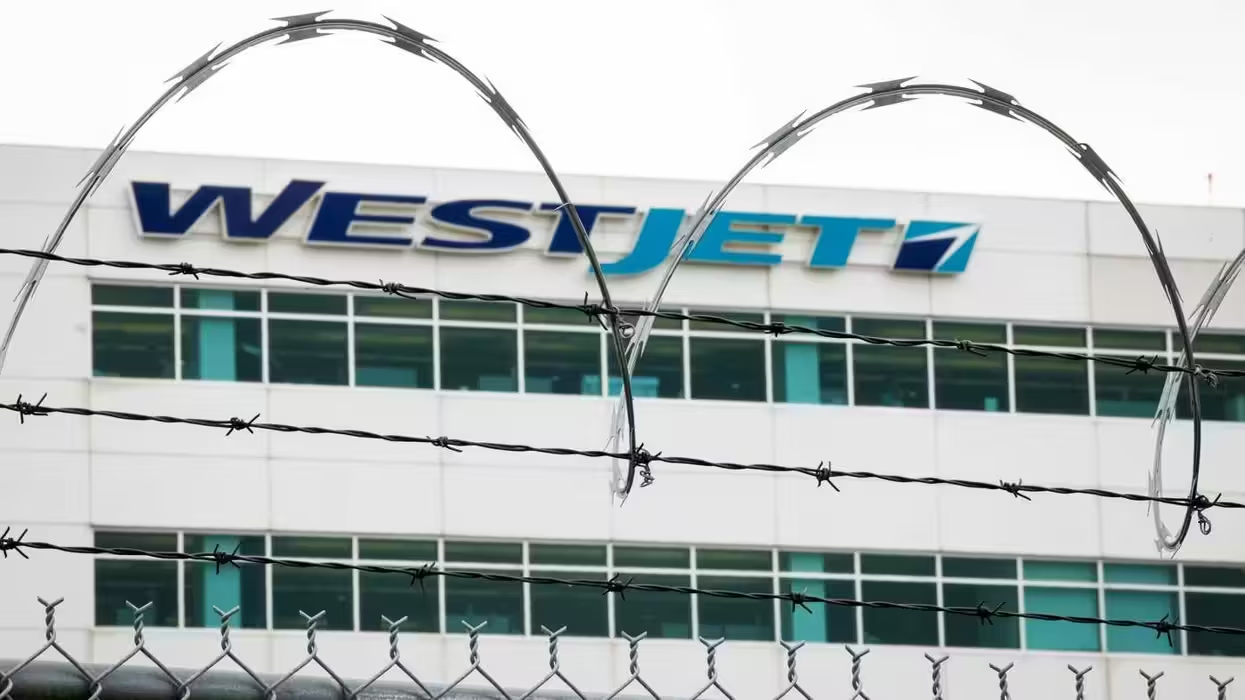
WestJet Flight Attendants Strike: Airline Signs Wind-Down Plan
WestJet and the union representing roughly 4,400 flight attendants have signed an operational wind-down plan. This agreement will guide how the airline handles a possible WestJet flight attendants strike as early as this Sunday.
The deal was shared with union members on Tuesday. It was later obtained by The Canadian Press, revealing exactly how WestJet plans to ground its fleet if talks collapse.
What the Wind-Down Plan Covers
The agreement outlines clear steps for grounding planes safely. It also explains how cabin crew will return home once a work stoppage begins.
Cabin crew already working a flight when job action starts will complete that trip to its final destination. However, those unable to return home immediately will receive support from the airline.
According to the deal, affected staff would get hotel accommodation for up to a week. Alternatively, they could receive a flight back to another Canadian city, though this is “subject to seat availability.”
This wind-down plan highlights just how serious the labour dispute has become. Consequently, both sides are preparing for every possible outcome before Sunday’s deadline.
Why a Strike Now Looks Likely
Cabin crew at the Calgary-based airline voted 99 per cent in favour of a strike mandate in mid-July. Since then, bargaining teams have negotiated intensely inside Calgary hotel conference rooms.
A mandatory cooling-off period is now drawing to a close. Therefore, unless both sides reach a deal, flights could start being grounded by Friday.
Past airline labour disputes have shown a similar pattern. Typically, cancellations increase sharply just days before a strike actually begins.
Importantly, any strike must be preceded by a 72-hour warning from the union. This gives passengers some time to prepare, though uncertainty still looms large.
WestJet has responded by adjusting its booking policies. Specifically, passengers with flights scheduled between July 30 and August 4 can make a one-time change or cancel without any fee.
Meanwhile, travellers booked on WestJet Encore or code-share flights with partners like Delta Air Lines won’t be affected. This detail offers some reassurance amid the broader uncertainty.
The Core Dispute: Unpaid Work and Wages
Compensation for ground-based work remains the central sticking point in these negotiations. Notably, this same issue sparked a major work stoppage at Air Canada less than a year ago.
Alia Hussain, who chairs the union’s WestJet contingent, explained the frustration clearly. “The sticking point right now for us is unpaid work and how our wage is triggered. In addition to that, it’s our actual wage rate,” she said in an interview outside the Calgary airport earlier this month.
She added further context regarding the scale of the issue. “We believe that there is a large amount of unpaid work, which is why this remains an outstanding issue at the bargaining table.”
WestJet CEO Alexis von Hoensbroech has downplayed the strike authorization vote. He pointed out that such a step is typical during negotiations “and does not mean a strike will occur.”
Understanding the Credit-Based Pay System
Airlines across North America commonly use a credit-based pay structure. This system combines several types of duty into one overall pay rate.
As WestJet’s website explains it, “rather than paying a lower hourly wage for every hour on duty, the credit hour system combines flight time, ground duties, delays and other required work into a single, higher rate of pay.”
This structure, however, is exactly what flight attendants argue leaves ground work undercompensated. As a result, it has become the flashpoint for this entire dispute.
The Financial and Public Pressure
A shutdown, even a brief one, would cost WestJet millions of dollars. This is especially true given the timing, which falls during peak summer travel.
John Gradek, who teaches aviation management at McGill University, summarized the stakes plainly. “WestJet can’t afford a complete shutdown during their peak summer travel period,” he said.
The scale of daily operations makes any disruption costly. WestJet operates more than 600 flights per day, carrying over 70,000 passengers on some days, according to the company.
Beyond the negotiating table, public pressure has been building steadily. The Canadian Union of Public Employees launched a “day of action” with rallies across the country on July 14.
In Calgary, roughly 250 flight attendants gathered outside WestJet’s headquarters in uniform. They held signs reading “Ready to Strike,” “Unpaid work won’t fly,” and “Frustrated with WestJet? So are we.”
Additionally, ads supporting the cabin crews’ case have appeared across podcasts and TikTok. This growing campaign shows how much visibility this dispute has gained nationally.
What Passengers Should Know
Passenger rights remain an important part of this unfolding story. Gabor Lukacs, president of Air Passenger Rights, clarified what travellers are entitled to.
Customers whose flights are cancelled ahead of or during a potential strike can rebook free of charge. Importantly, this applies to any airline, not just WestJet.
For cancellations before job action begins, the airline also owes affected customers compensation. According to Lukacs, this could total up to $1,000 in cash for the inconvenience.
For cancellations that happen during an actual strike, refunds become an alternative option instead. This distinction matters for anyone currently holding a WestJet booking.
What Happens Next
Whether a strike ultimately goes ahead depends largely on wage negotiations. In particular, so-called boarding pay remains a major unresolved issue between both sides.
This debate follows a similar dispute at Air Canada, where flight attendants secured ground-pay compensation in February. That deal will climb to 70 per cent of their hourly rate for the hour before takeoff.
For now, both WestJet and the union continue negotiating against a tightening deadline. Passengers, meanwhile, are left watching closely as Sunday’s possible strike date approaches.